2025 AEC Congress – A Wrap-Up
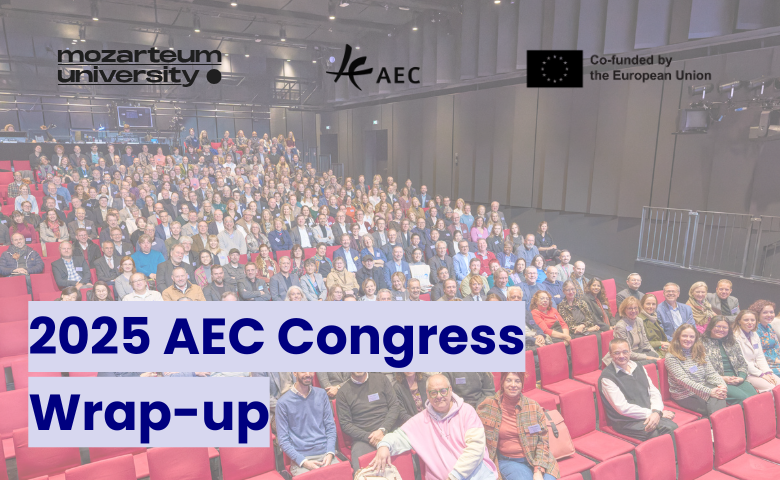
The AEC Annual Congress and General Assembly 2025, held under the theme “The Sound of Future Music Education: Leadership, Innovation and Wellbeing” took place at the Mozarteum University in Salzburg, Austria, from 5 to 8 November 2025.
This year we welcomed 470 participants from 45 countries. Celebrating another year of a congress that united people from all over the world to share their vision and passion!
The congress programme was designed around three interlinked themes:
- Healthy Musician in a Sustainable World
- Educating Professionals between Tradition and Innovation
- Leadership and Advocacy in a Global World
Pre-congress workshops
- The Peer Reviewer Training was facilitated by MusiQuE and it provided professional development for potential and current MusiQuE Peer Reviewers and for colleagues interested in quality assurance.
- The DEI – workshop, facilitated by members of the AEC Diversity, Equity, and Inclusion (DEI) Panel of Experts, provided participants with opportunities to share experiences, identify good practices, and collaboratively envision institutional change in relation to DEI in Higher Music Education.
- Empowering tomorrow’s talents – paving the way. How to strengthen the interconnection between the levels of musical education – in collaboration with YMTE
- EPASA Workshop on Students Leadership
- Music and Medicine
Congress kick-off
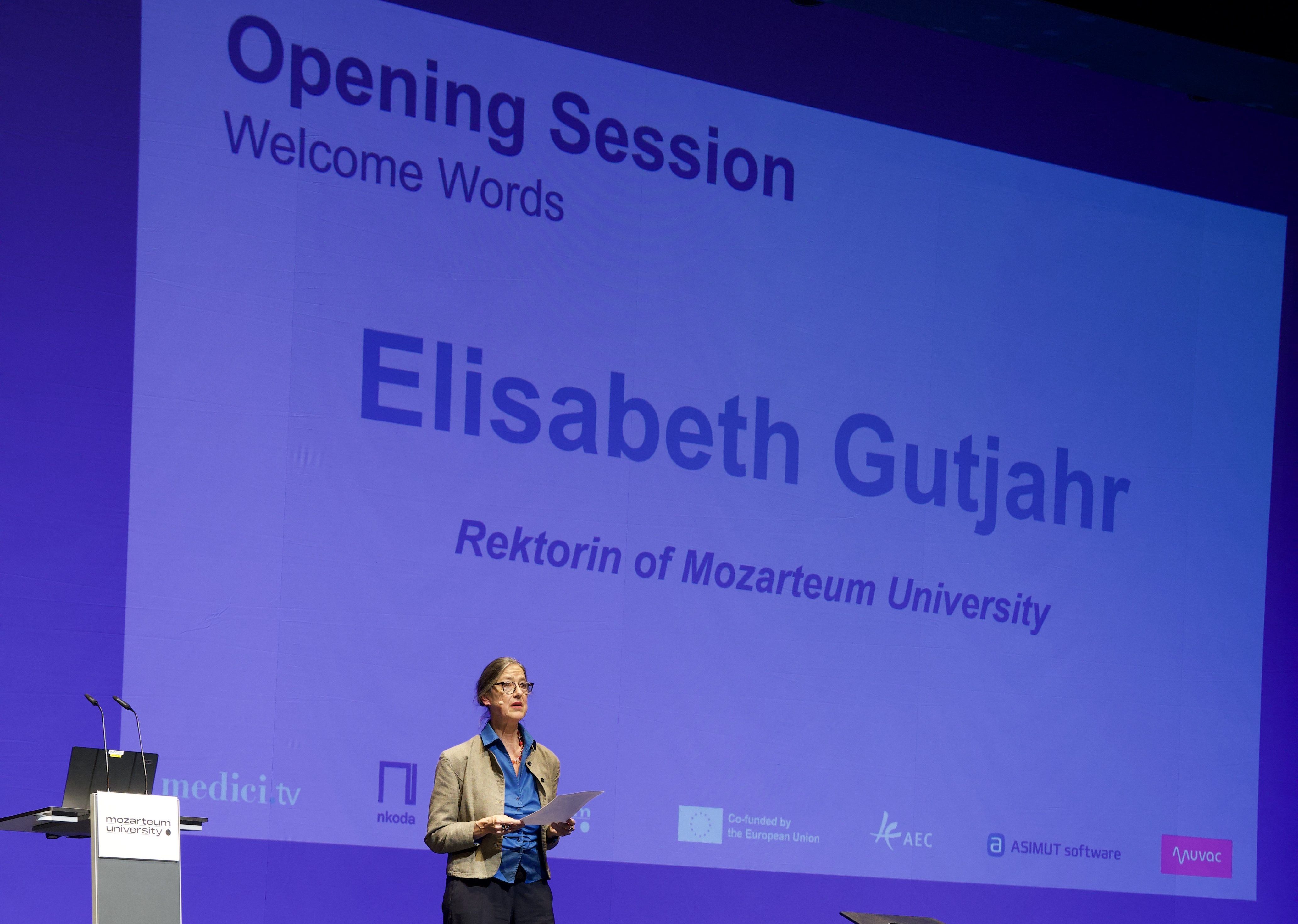
Thursday afternoon marked the official start of the congress with a guided tour of the Mozarteum University and welcome sessions for new delegates where a formal introduction to the AEC and the Annual Congress was given and a buddy system pairing experienced participants with newcomers was set up. Finally, the opening event began with welcome words from the hosting institution’s Rektorin, Elisabeth Gutjahr, the former EPASA President and Vice-President Monica Vejgaard and Miranda Harmer, and the President of the AEC, Deborah Kelleher.
The opening event was followed by an inspiring keynote speech delivered by Prof. Dr. med. André Lee, which inspired us all by highlighting findings in medicine related to musicians’ performance and health.
Towards the end of the first official day of the congress, participants had the opportunity to engage into group discussion during the opening brainstorming sessions, where participants explored a large range topics proposed by attendees, such as community engagement, inclusion, the transition from the academic world to the profession, artistic research, well being, the digitisation of Erasmus and many more.
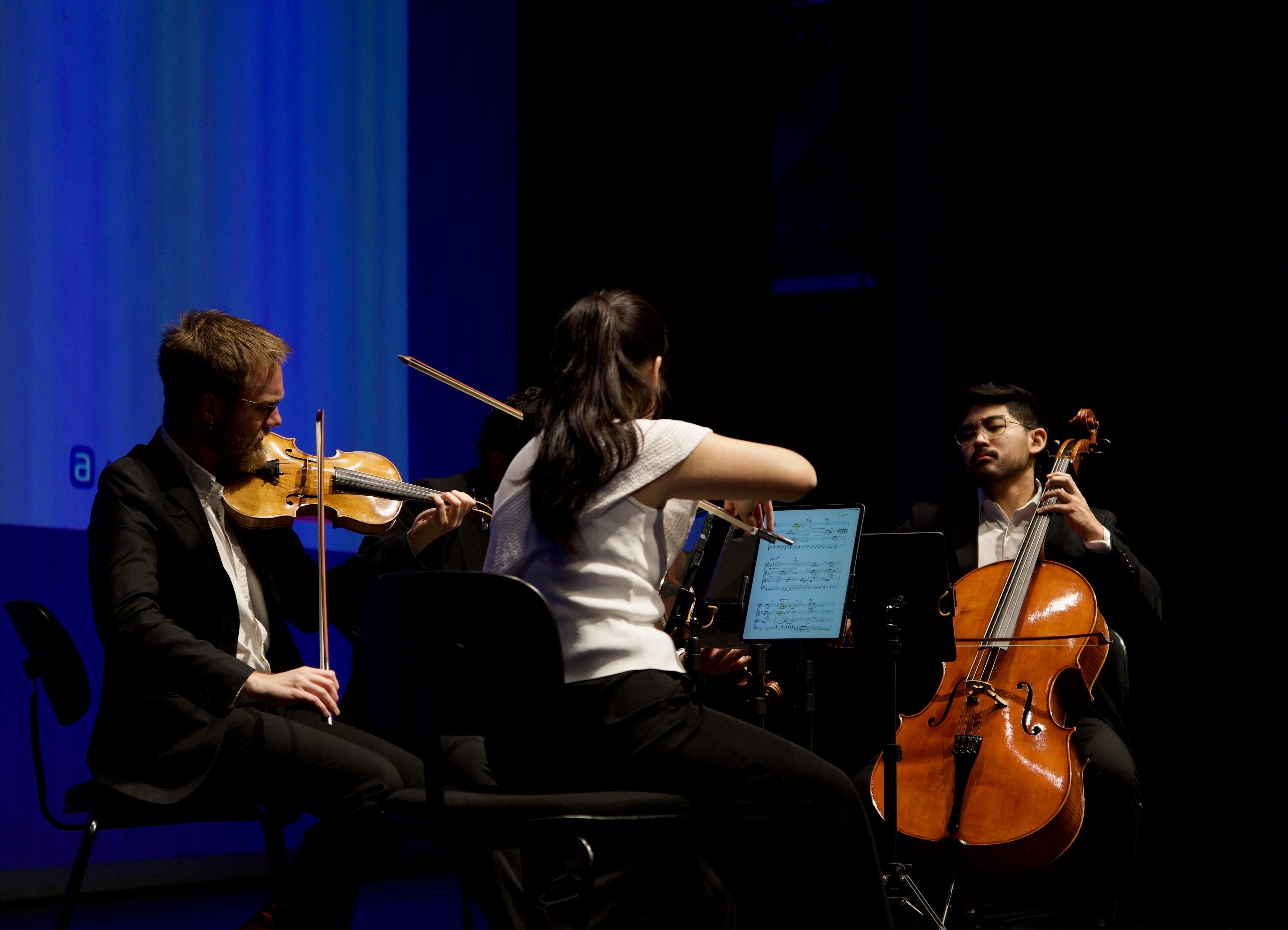
The first day of the Congress concluded with a reception, which was followed by a concert. The concert was part of the ORA Early Music Festival at the Mozarteum Foundation.
Friday’s first plenary session started with the musical introduction and warm welcome words by Anothai Nithibon from SEADOM. This was followed by three inspiring Keynotes: “The Healthy Musician in a Sustainable World“ by Cliodhna O’Connor, Royal Irish Academy of Music, Dublin, “Educating Professionals between Tradition and Innovation“ by Paul Feigelfeld, Mozarteum University in Salzburg, Austria, and “Leadership and Advocacy in a Global World“ by Stella Mendonça, MUSIARTE, Maputo, Mozambique.
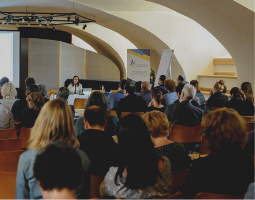
Afterwards, the programme continued with three sets of six parallel sessions, each focusing on a different aspect of the conference’s themes. Participants had the opportunity to attend three out of the eighteen sessions offered. In addition, the afternoon programme included various activities within the Wellbeing Support Programme, which served as another main parallel track of this year’s congress.
1. Parallel Sessions on Health and Wellbeing
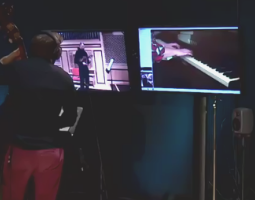
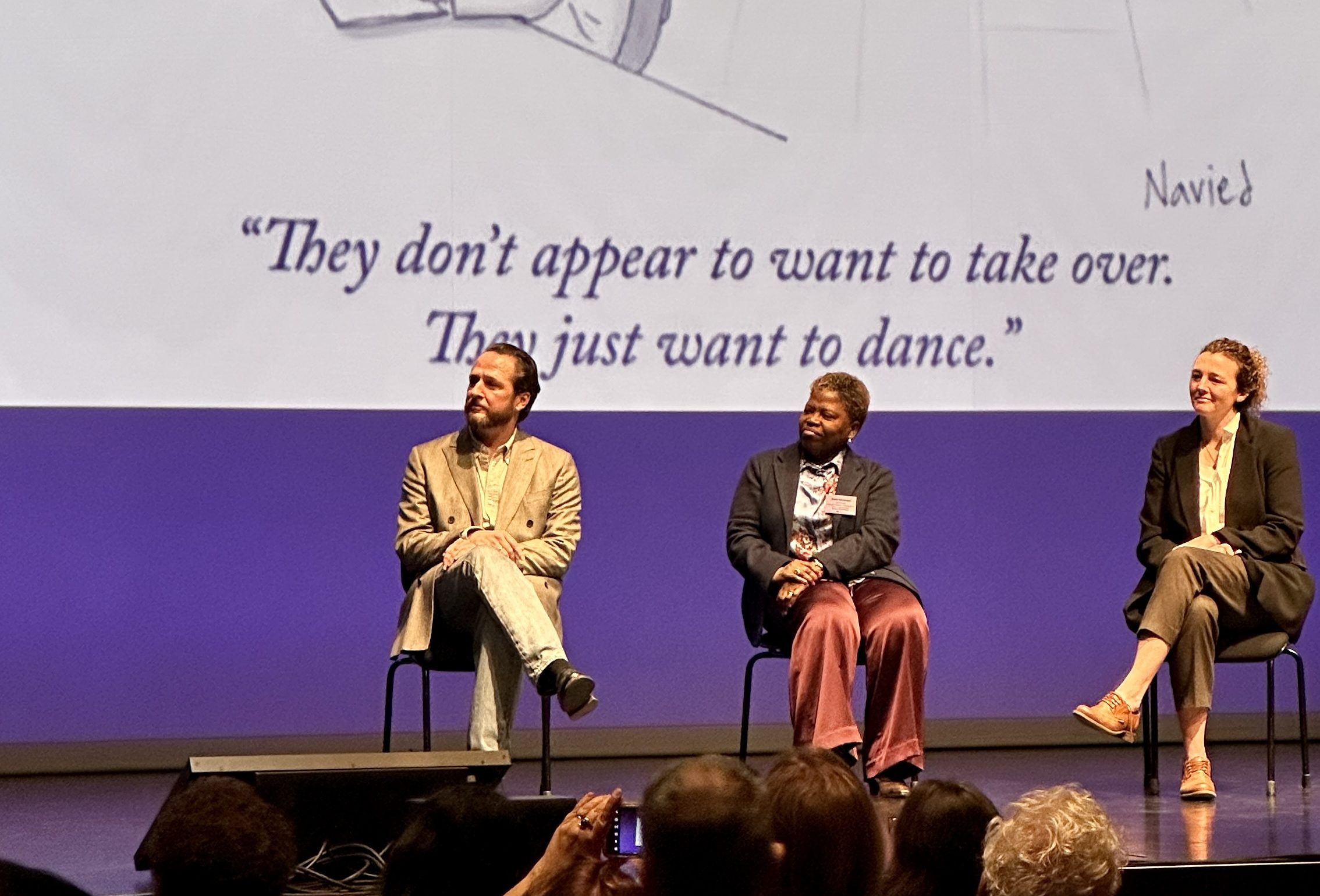
A series of parallel sessions addressed how to create a healthy, sustainable community in higher music education. Participants discussed ways of developing performance excellence and wellbeing, from the coaching of high performers and development of collaborative support teams to promoting anatomical awareness using Body Mapping techniques that minimize the risk of injury. Sessions profiled initiatives such as Live Music Now, which gives young musicians valuable performance experience while it uses music to comfort, heal, and inspire audiences in hospitals, care homes, and other places of limited access. State-of-the-art simulation labs and data capture techniques were demonstrated, aiming at enhancing professional competencies and supporting the health of musicians. Diversity, inclusion, and accessibility provided other key areas of focus, with personal testimony illuminating the challenges for musicians with special educational needs and other barriers. Career and coaching development were explored through the lenses of self-leadership, resilience, and transferable skills, all enabling students to manage sustainable and satisfying professional careers. Together, these sessions underlined how high performance and wellbeing are mutually reinforcing and, further, how the only way for everyone to flourish is in a healthy, inclusive community.
2. Parallel Sessions on Education and Profession
Parallel Sessions on Education and Profession gave insight into how new pedagogies and digital tools shape the future of music education. Experts from the field of higher music education shared their experiences with AI-driven artistic and educational formats, critically discussing, among others, algorithmic bias and the innovative use of ChatGPT-4 as a “choreographic object.”. Meanwhile, the EPASA-led session challenged traditional Master/Apprentice models on behalf of student agency and socially safe learning environments. Furthermore, discussions highlighted the role of Higher Music Education Institutions as creative incubators, connecting tradition to modern market demands and technological advances. Student-led initiatives, such as the incubation hub “Sound” and projects entitled “On the Road”, showed in what ways students can be transformative in creating socially impactful change. Taken together, these sessions underlined the dynamic interplay between tradition and innovation in shaping the next generation of music professionals.
3. Parallel Sessions on Leadership and Advocacy
A series of sessions around Leadership and Advocacy tackled how experienced, young and emerging leaders are reconceptualizing leadership in higher music education. The future of leadership was explored through creativity, new insights, and lifelong learning, while practical workshops provided tools to master change management, overcome resistance, and implement transformational change within your institutions. The interactive debate ‘Are We Alone?’ and the fishbowl session Bridging Worlds: Towards Equitable Partnerships urged leaders from Africa, Asia, and Europe reflected on structural and cultural challenges and critically considered issues of power in making sustainable collaborations. The IN.TUNE European Universities Alliance highlighted how leadership and transnational collaboration can leverage initiatives like Erasmus+ for innovation, institutional transformation, and sustainable growth. Altogether, these sessions stressed that an innovative approach to leadership should be inclusive, collaborative, and responsive to future generations’ needs.
Education in Europe: global ambitions and national interests
With short breaks for refreshments and networking between sessions, the intensive Friday programme continued with a second Plenary Session, which focused on “United in diversity” as a guiding principle for Europe. The session also featured two special guest contributions: Karoline Edtstadler, Governor of the Province of Salzburg and former Austrian Minister for Europe, and a video message from Hannes Heide, Member of the European Parliament (CULT Committee on Culture and Education), who both shared their perspectives on the future of music education.
Towards the end of Friday, the programme continued with the Regional Meetings. Divided into ten groups based on their countries, participants had the opportunity to share their thoughts around lifelong learning opportunities, quality assurance and accreditation and the programme of the congress. Each year, this session offers valuable opportunities for participants to connect with one another, and it has become an important space for dialogue.
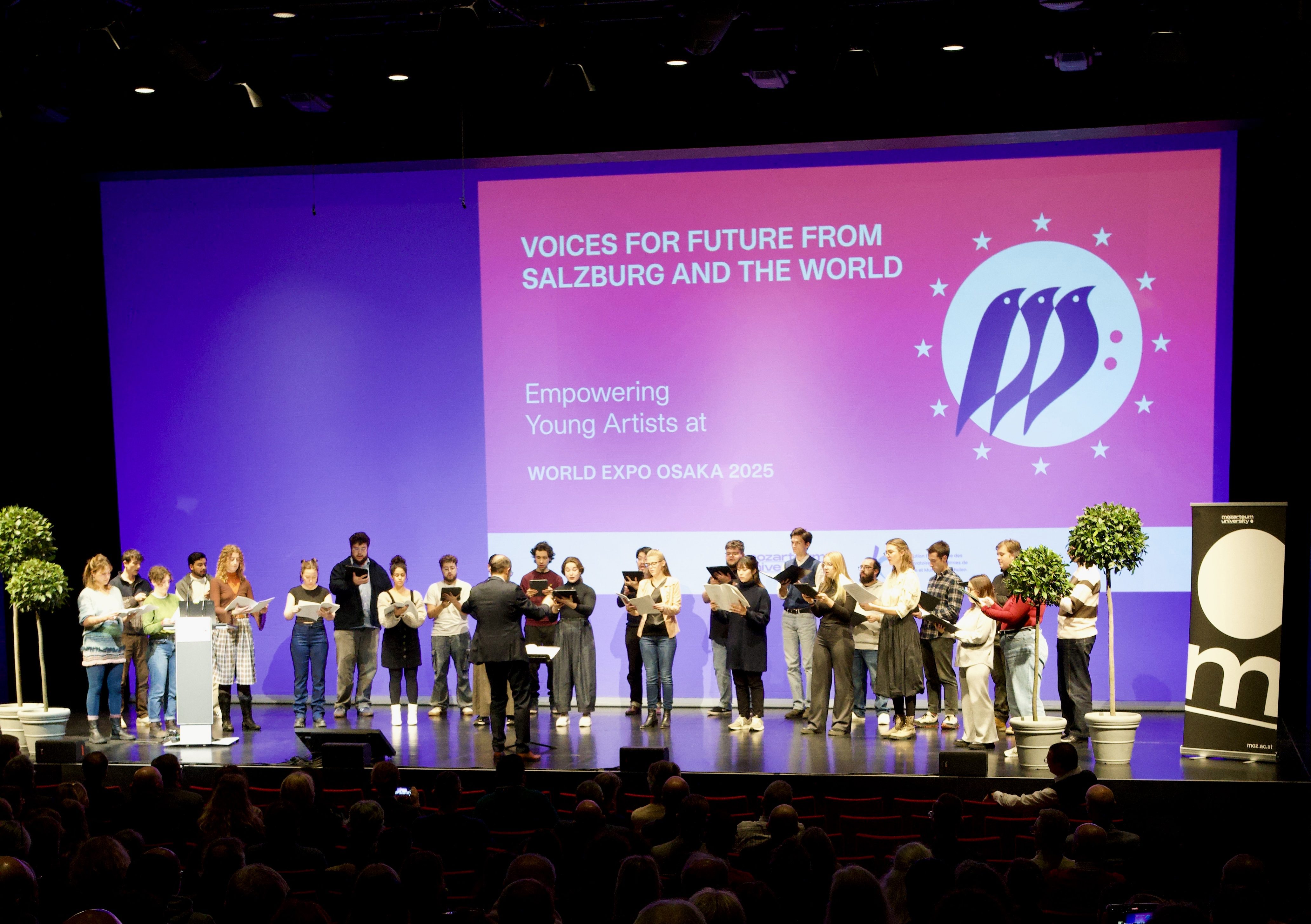
To wrap up an intensive day at the congress, the day was concluded with a special concert given by 27 student singers from the Designing Voices for Our Lives project. Following their performances at the World Expo in Osaka, these young artists from across AEC member institutions reunited to share a multilingual, a cappella programme that celebrated cultural exchange, artistic collaboration, and the unifying power of music.
The Grand Finale of the Congress
After an early morning Qi Gong Session, offered as part of the wellbeing support programme organised by Mozarteum, participants gathered for the Information Forum, featuring brief presentations from AEC Member institutions, moderated by AEC president, Deborah Kelleher. This year, we had the pleasure of hearing from 31 initiatives, each sharing insights that attendees could further explore at the Information Market during informal talks with the presenters.
The morning concluded with Discussion Groups on the following topics:
- Safe&Brave Space – Facilitated by Tuan Hao Tan and Steven Faber, from the AEC DEI Allies network
- From Shortage to Sustainability: Collaborative Leadership in Music Teacher Education – with Finn Schumacker, AEC, Tayloe Harding, Dean of the School of Music, University of South Carolina, US, and Isolde Malmberg, SCHEME group
- Managing Institutions in Difficult Contexts – with Ivana Perkovic and Gyula Fekete
- What is the sound of future music education? Discussion led by EPASA, with Miranda Harmer and Natalie Roe
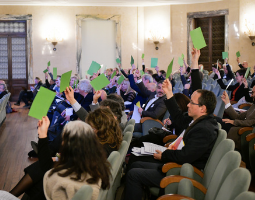
The day continued with the Students’ Wrap-Up and EPASA General Assembly, during which new EPASA board members were elected. At the same time, AEC members gathered in the AEC General Assembly 2025, where key decisions were endorsed and two new AEC Council members were elected and AEC Executive Committee members were confirmed for a second term.
In the Closing Session, the AEC proudly announced that the next Congress will take place at the Hamburg University of Music and Drama on 4-7 November 2026.
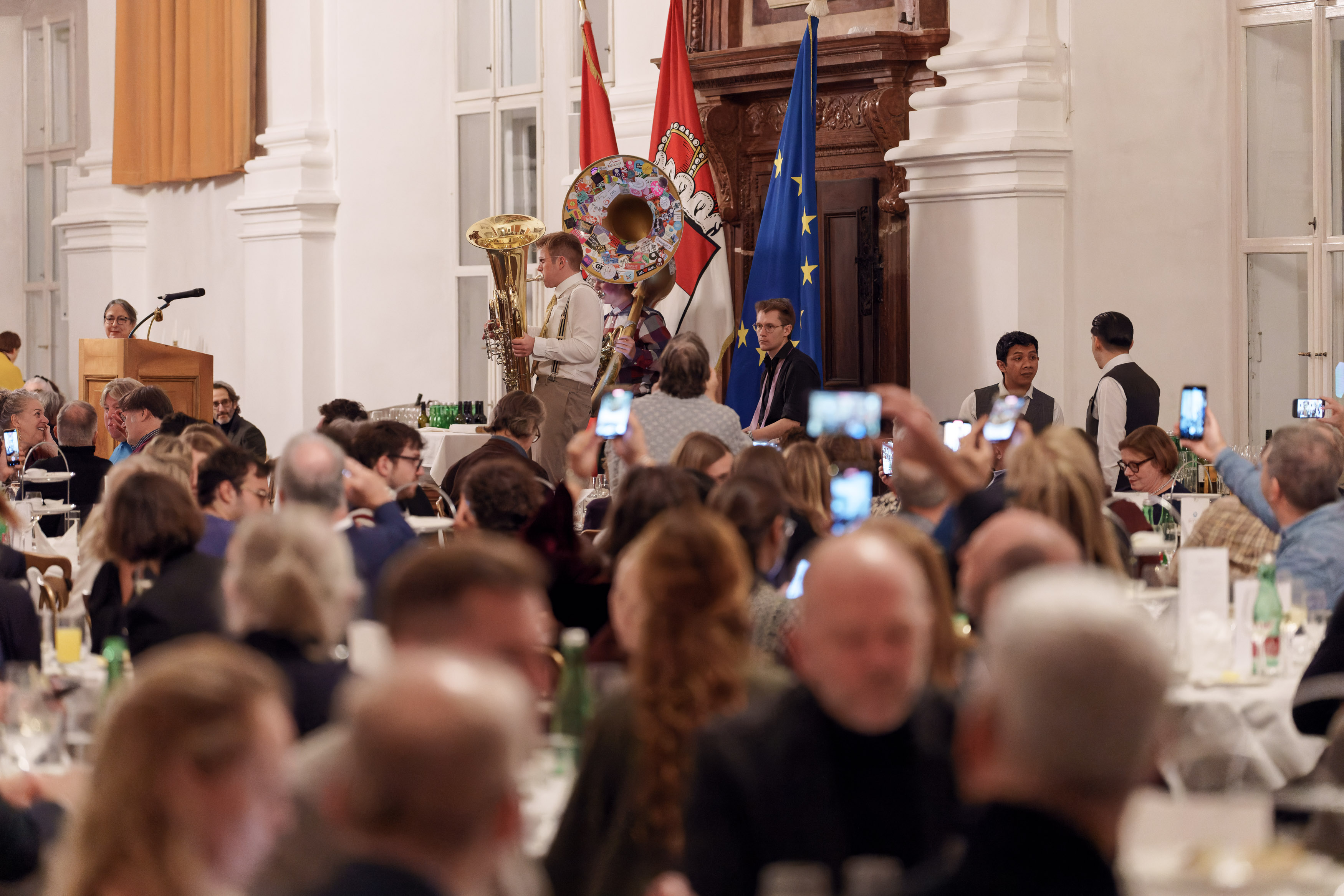
This Congress edition was wrapped up with a visit to the breathtaking Residenz Palace Carabinieri Hall, where the Closing Dinner also took place.
The AEC would like to express its heartfelt gratitude to all members and partners who travelled to attend this event and to all the speakers, moderators, Congress Committee members, AEC Working Group members and our sponsors ASIMUT, nkoda, MUVAC and medici.tv who contributed to the success of this gathering.
A special thanks goes to the staff of the Mozarteum University (Elisabeth Gutjahr, Katrin Meraner, Christian Breckner, David Hummel, Franziska Wallner and all technicians) for being such wonderful hosts, and ensuring the event ran smoothly on-site, and to the Mozarteum University’s students for their irreplaceable support!
The AEC is looking forward to meeting you at the next AEC Congress and General Assembly in Hamburg in November, 2026 as well as at other AEC events!