
Back to Brussels, back to work
After the summer break, EU politics return to Brussels – and with them the debate on Europe’s future. For the cultural and creative sector, including AEC and its partners, this means renewed advocacy: ensuring access to music education for all, improving conditions for creators, performers and educators and sustaining international collaboration that drives creativity and innovation.
With the launch of the Multiannual Financial Framework (MFF) 2028–2034 proposal, negotiations have begun and are expected to run at least until the end of 2026. Much remains open. Although the proposal nearly doubles overall funding on paper, the details are less encouraging.
Erasmus+ is a case in point. The envelope is presented as rising from €26 billion to €40.8 billion, yet the plan folds the European Solidarity Corps – a programme engaging 18–30-year-olds in solidarity actions – into Erasmus+. The nominal +50% increase therefore falls to roughly +35% for Erasmus+ itself. Once inflation across a nine-year period is considered, the real uplift could be closer to +15% – insufficient to position Erasmus+ as the EU’s flagship for mobility and European values.
In response, AEC has joined the Erasmus+ Coalition, a Europe-wide alliance of 81 networks representing 6,200+ organisations in education, youth and training. The Coalition calls for:
- A five-fold increase in Erasmus+ funding to match demand and costs;
- Protection of Erasmus+ as a stand-alone flagship, with smart synergies to related programmes;
- Strong support for civil-society and multiplier organisations, keeping inclusion, diversity and democratic engagement central;
- Ambitious objectives for innovation, cooperation and systemic reform across sectors.
AEC represented at the high-level roundtable in the European Parliament
A stronger Erasmus+ programme as well as increased funding for the Creative Europe and Horizon programmes were discussed at the high-level roundtable “Culture in the Next EU Budget” on 23 September 2025 at the European Parliament, where AEC joined 50 other European networks in discussion with MEPs, including Cult Committee Chair Nela Riehl, Carla Tavares, co-rapporteur of Parliament’s MFF own-initiative report; and Hannes Heide, CULT Committee rapporteur on the opinion of a revamped long-term budget for the Union in a changing world.
The debate underscored that the final budget decisions rest with the European Parliament and the Council – that is, with national governments, and not the European Commission.
AEC to launch national campaigns in collaboration with AEC membership
Accordingly, AEC will prepare a national-level campaign in the coming months. We will provide letter templates and advocacy materials for the national associations of HMEIs to engage relevant ministers and decision-makers on the importance of music education to the entire music ecosystem. Where no national association exists, the AEC office will work directly with institutions to agree roles and responsibilities.
Previous MFF cycles were less contentious. Today’s negotiations unfold amid intense global competition and war on Europe’s borders – pressures that are reshaping priorities and pushing talks into unfamiliar territory. In this context, AEC will work with its members to safeguard music education, protect academic freedom, and promote fair working conditions for our graduates – foundations without which Europe’s cultural life and creative innovation cannot thrive.
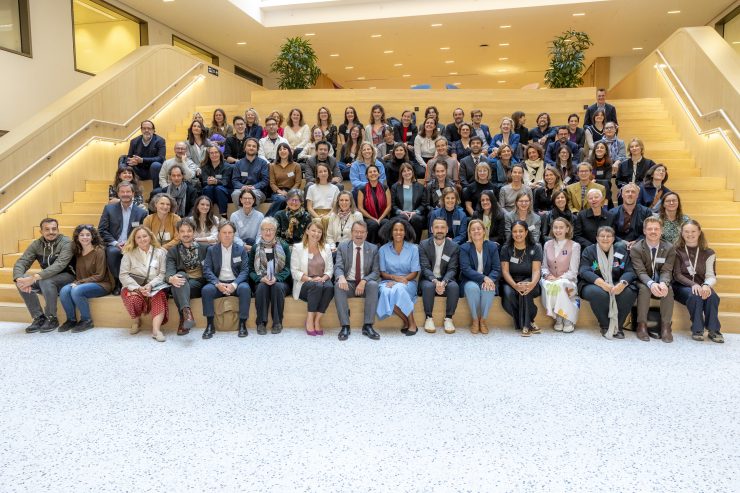
Participants at the roundtable in the European Parliament 23rd September 2025. © EU DG Comm