When culture wins, Europe wins: AEC at the Cultural Deal for Europe: Annual Policy Conversation
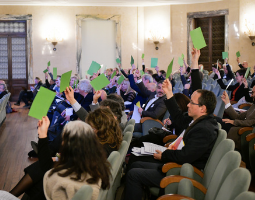
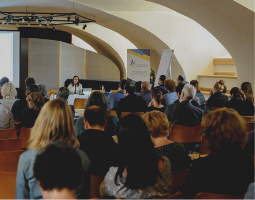
On 3 February 2026, the Cultural Deal for Europe: Annual Policy Conversation took place at Bozar in Brussels. The event was organised by Culture Action Europe, Europa Nostra, and the European Cultural Foundation, bringing together policymakers, cultural networks and sector representatives at a decisive moment for Europe’s cultural future.
The discussions were based on the Culture Compass, recently presented by the European Commission as its new strategic framework for culture, alongside its proposal for the 2028–2034 Multiannual Financial Framework (MFF). At the same time, European leaders have repeatedly underlined the crucial role of culture in safeguarding European values at a time of geopolitical uncertainty.
The focus in Brussels was therefore not on vision alone, but on delivery.
Together with a broad coalition of partner organisations, AEC was present to support key demands aimed at strengthening the position of culture and arts education in future EU policies and funding frameworks. Among the priorities highlighted were:
- A 2% allocation for culture within the MFF
- A dedicated funding strand for Creative Europe
- A strong position for culture and creativity within the next Horizon Europe
- Expanded funding for Erasmus+
- Clear recognition of the intrinsic, social and economic value of music and music education
- Stronger structural links between culture and education policies
In discussions led by Fabien Miclet, Members of the European Parliament, including Nela Riehl, Helder Sousa Silva, Marcos Ros Sempere, Hannes Heide, and Zoltan Tarr expressed strong support for a Europe built on shared values and for ensuring that culture receives both political recognition and adequate financial resources across Commission portfolios.
A key intervention came from Glenn Micallef, who emphasised the close collaboration between the Commission and the cultural sector in shaping the Culture Compass. He highlighted two upcoming priorities to be developed together with the sector: an EU Artist Charter and an AI strategy for the cultural and creative sectors.
AEC fully supports these objectives and stands ready to contribute — helping to ensure a sustainable future for the next generation of musicians, creators and educators.
Because, as reaffirmed during the event: When culture wins, Europe wins.
UK–EU Cultural Relations: Key Developments in Early 2026
Recent diplomatic and policy engagements between the United Kingdom and the European Union have reinforced momentum on cultural cooperation, particularly in education, youth mobility and sector funding frameworks.
On 17 December 2025, the UK and the EU formally agreed that the United Kingdom will associate with the Erasmus+ programme from 2027, opening the EU’s flagship education, training, youth and sport scheme to UK learners, apprentices and staff. This agreement was presented as part of the broader UK–EU “reset” of cooperation following post-Brexit negotiations.
In mid-February 2026, a delegation from the European Parliament’s Committee on Culture and Education (CULT) visited London to further discussions on the UK’s return to Erasmus+ for the post-2027 period. The visit also addressed practical barriers to EU–UK cultural cooperation, including issues that affect touring artists and cross-border collaboration. In a public statement, the MEPs described the Erasmus+ agreement as a “turning point” in EU–UK relations and underscored the need to go further in facilitating people-to-people mobility.
Alongside institutional engagements, pan-sector cultural stakeholders have continued to call for deeper cooperation. In November 2025, more than 200 cultural and creative organisations from across the EU and the UK — including AEC and other networks such as Culture Action Europe — signed joint Policy Recommendations developed at the inaugural Forum on EU–UK Cultural & Media Relations in Brussels. These recommendations call for practical measures such as full UK participation in the EU’s Creative Europe programme (and its anticipated successor AgoraEU), removal of mobility barriers for professionals between the two regions, and the establishment of structured cultural dialogues.
Creative Europe, the EU’s long-standing cultural and creative sectors funding programme, has historically supported transnational collaboration, artistic diversity and project mobility since 2014 but has not included the UK since Brexit.
The Forum on EU-UK Cultural & Media Relations havs just started a petition “United Kingdom to join the Creative Europe programme from 2027” which you can find here http://petition.forum-uk.eu/.
AEC encourages all members and partners to support the petition and help ensure that UK staff and students can once again participate on equal terms in the EU’s highly regarded development programme.
Creative Europe Interim Evaluation Published
In December 2025, the European Commission published a consolidated evaluation covering both the final evaluation of the 2014–2020 Creative Europe programme and the interim (mid-term) evaluation of the 2021–2027 edition. The report confirms that the programme is delivering strong European added value across culture, creative and audiovisual sectors.
Key Positive Findings
- The interim evaluation confirms that Creative Europe effectively contributes to cultural diversity, cross-border cooperation and competitiveness in cultural and audiovisual sectors. This includes transnational partnerships, audience development and mobility support.
- A large volume of mobility activity and networking has been supported since the start of the current programme period, reinforcing Europe-wide collaboration.
- In the audiovisual sphere (MEDIA strand), there are clear indications of increased cross-border co-productions and international reach of EU-supported works.
Challenges Identified
Despite the positive outcomes, the mid-term evaluation and subsequent discussions within the European Parliament and stakeholder networks have highlighted several areas where improvements or adjustments are needed:
- Funding pressure and oversubscription: The programme is heavily oversubscribed — many high-quality applications are turned down due to budget limitations. As one Commission representative noted in related evaluations, “the budget is not there” to fund all deserving projects.
- Accessibility concerns: Larger and more experienced organisations tend to have higher success rates in applications, raising questions about access for smaller, newer applicants.
- Future structure debate: As the EU prepares for the successor to Creative Europe (the proposed AgoraEU instrument), there is debate between the European Commission and Members of the European Parliament over how to preserve sector-specific funding while achieving flexibility under a broader framework.
Implications for the Remainder of 2021–2027
The mid-term evaluation is meant to inform decisions for the remainder of the current programme period as well as the design of future EU cultural funding frameworks.
AEC strongly supports the call for adequate resourcing, simplification, and strengthened outreach in order to enable broader and more equitable participation across Europe’s cultural and creative ecosystems.