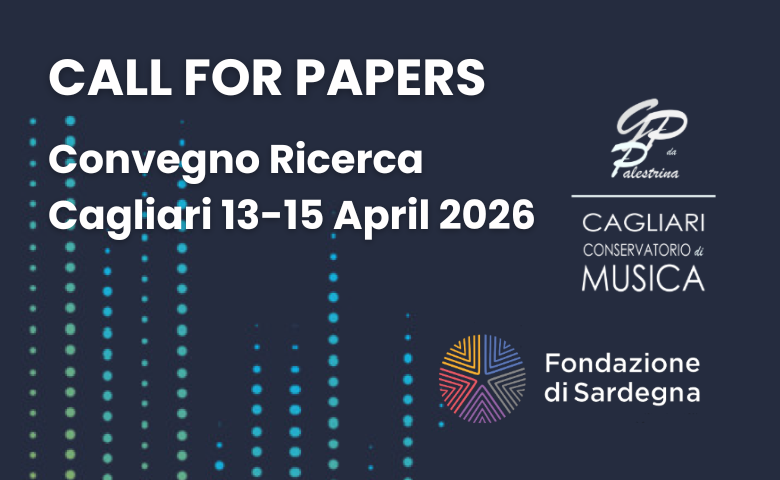
In recent decades, artistic research in music within higher education has increasingly received institutional recognition, opening new spaces for reflection and experimentation. Conservatoires and academies—institutions historically centred on practice-based training and the transmission of technical and interpretive skills—are now redefining their role within a broader intellectual landscape of knowledge, in dialogue with universities and research centres focussing on music.
This ongoing process raises fundamental methodological, epistemological, and identity-related questions:
- What kinds of knowledge are generated through and in musical practice?
- How do theoretical reflection, artistic experimentation, and creative practice intertwine?
This conference aims to explore these questions from an international and comparative perspective, drawing on the diverse trajectories that, in different countries, have led to the definition and institutional recognition of musical research in the artistic field. By fostering an exchange of methods, practices and visions, the conference seeks to promote reflection on the current state and future directions of musical research, while encouraging constructive engagement between research conducted in academic settings and research grounded in artistic-performative domains.
Call for Contributions
The organizers welcome contributions that offer historical or theoretical perspectives, or present an individual research project (either ongoing or completed), as a case study addressing epistemological, methodological, cultural-historical or interdisciplinary issues.
Possible Areas of Discussion:
- The meaning of ‘artistic knowledge’: divergences and convergences with other forms of knowledge production.
- The relationship between method, process and outcome in musical research.
- Awareness, authorship, and critical agency in artistic research.
- Artistic research as a space for reflection and experimentation for composers and performers.
- Defining the object of enquiry: data collection in artistic research.
- Documenting the process: making the knowledge generated through performative or creative action visible, communicable, and assessable (recordings, journals, unconventional scores, multimedia texts, etc.).
- The body as a site of experience and knowledge: research strategies centred on the embodied practice of the performer or the composer.
- Documentation and analysis of musical research in different national, cultural and institutional contexts.
- Historical roots of contemporary research: pioneers, movements and traditions.
- The legacy of historical musicology, theory and musical analysis in current artistic research practices.
- Possible convergences of approaches, standards and goals between higher artistic education institutions and universities.
- Intersections between musical research and other fields (visual arts, theatre, dance, media studies, philosophy, cultural studies).
- Integration of performative, creative, theoretical, and historical-cultural competences within individual or institutional research frameworks.
Submission Guidelines
Presentation Formats Depending on the nature of the contribution, presentations may take the form of:
- Spoken paper: 20 minutes duration followed by 10 minutes discussion.
- Lecture-recital: 30 minutes followed by 10 minutes discussion.
Language: The official languages of the conference are English and Italian.
Proposal Requirements Proposals should be sent to ricerca@consca.it no later than December 15, 2025. Each proposal must include:
- Title of the paper.
- Name(s) of the speaker(s).
- Affiliation.
- Abstract of approximately 300 words.
Funding – Thanks to the support of the Fondazione di Sardegna, assistance with accommodation expenses will be available. Details and eligibility will be communicated upon acceptance, with priority given to participants without institutional funding