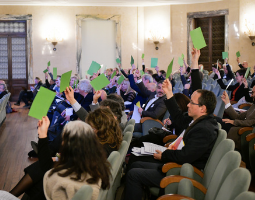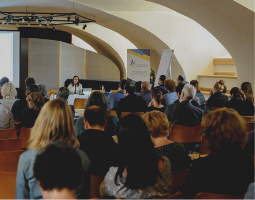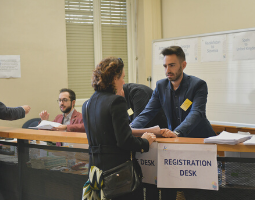
Following the recent HarMA HUB presentation in Valencia, the HarMA HUB editorial team is pleased to announce the official Call for Papers for the HarMAnalysis Repository, a new online collection of analytical case studies designed to support the teaching and learning of music analysis across European Higher Music Education Institutions.
HarMAnalysis will provide open-access resources focusing on individual musical works or sets of works that illustrate specific styles, techniques, or analytical approaches. Its primary goal is pedagogical: to reflect the methodological diversity present in European music theory education and to serve as a tool for comparative learning and teaching development.
Submissions are now invited from music theorists, analysts, and educators. Contributions may include:
- Analyses of Evocación by Albéniz, featured in the 2025 Comparative Analysis Session (Valencia);
- Analyses of Chopin’s Mazurka op. 30 No. 2 or Szymanowski’s Mazurka op. 50 No. 1, discussed in the 2023 edition (Gdańsk);
- Analytical texts on other repertoire that may serve as valuable teaching tools.
Submissions based on original analytical methodologies are welcome, provided they align with the educational focus of the repository. Previously prepared analyses may also be adapted using the provided template.
Submission Deadline for Initial Collection: 20 November 2025
Each submission will undergo a double-blind peer-review process and, if accepted, will be published with an individual DOI and included under the repository’s registered ISSN. While the repository will remain open for ongoing submissions, texts received by the September deadline will form the first reviewed set, scheduled for publication within the HarMA HUB project timeline.
Submissions should be written in English and sent by email to the address below. Inquiries may also be directed to the editorial team:
- r.skupin@amuz.gda.pl
- a.krawczyk@amuz.gda.pl
- p.jedrzejczyk@amuz.gda.pl
Further functionalities, including web-based submission and enhanced search/filter tools, will be introduced with the HarMA HUB website launch in September 2025. At that time, contributors will also be invited to submit teaching resources to the project’s Bibliography section.
Please feel free to share this call within your institution or professional network. Contributions from a wide range of perspectives are encouraged and appreciated.