Autumn is a season filled with project meetings and partner events, and AEC representatives had a busy October actively attending and contributing to various gatherings and events hosted by our valued members and partners.
Read below where we travelled to:
Cluj-Napoca (Romania)
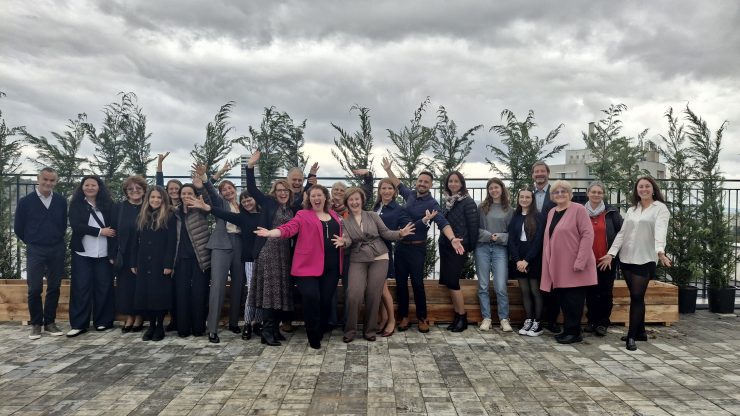
From 6 to 9 October 2025, AEC representatives travelled to Cluj-Napoca, Romania, to take part in a series of important events celebrating both cultural and educational collaboration.
On the evening of 6 October, they attended an inauguration concert, marking the opening of the new facilities at the Gheorghe Dima National Academy of Music. This was the second inaugural concert in the newly inaugurated Héritage Hall, a significant milestone for the Academy and the local cultural community.
The IncluMusic Final Event took place on 7 October, bringing together around 40 participants among partners, educators, students and stakeholders to reflect on the project’s outcomes and future directions.
On 8 October, IncluMusic project partners gathered for a dedicated meeting to review results, exchange experiences, and discuss next steps for future collaboration.
A Coruña (Spain)
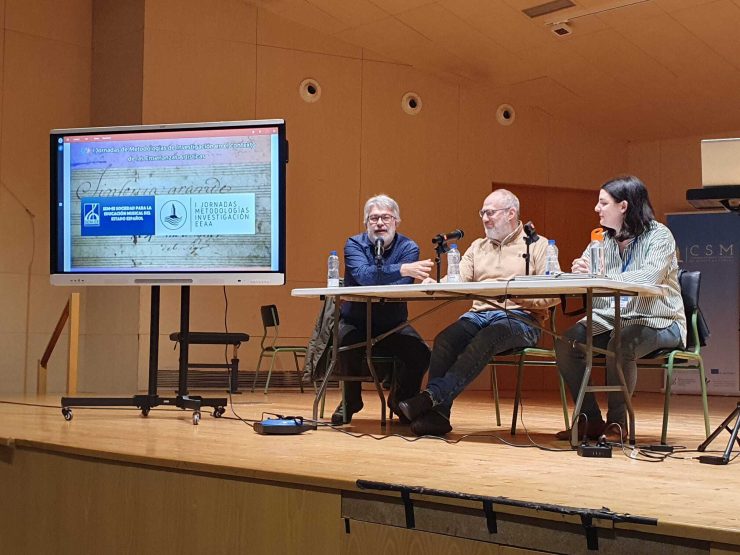
The first edition of the Conference on Research Methodologies in the Context of Artistic Education: Approaches, Challenges and Opportunities – Jornadas de Metodologías de Investigación en el Contexto de las Enseñanzas Artísticas: Enfoques, Retos y Oportunidades, organised by the Conservatorio Superior de Música de A Coruña in collaboration with the Spanish Society for Music Education – Sociedad para la Educación Musical del Estado Español (SEM-EE), took place from 9 to 11 October 2025 in A Coruña.
AEC Event Manager Beatriz Laborda represented the AEC and its ongoing commitment to Artistic Research, particularly in her capacity as Coordinator of the European Platform for Artistic Research (EPARM) Working Group.
On the opening day, the AEC contributed to a Panel of Experts titled “Artistic Research in the Academic Field: Approaches, Challenges, and Opportunities.”
Together with Rubén López Cano and Margarita Lorenzo de Reizábal, Beatriz addressed key issues impacting Higher Music Education Institutions (HMEIs) in Spain and across Europe. The panel explored topics such as:
- Institutional support for both supervisors and students
- Supervisor qualifications to guide Bachelor’s and Master’s research projects
- The preparation of students embarking on their first Artistic Research experiences.
On the second day, Beatriz presented “The AEC in the Context of Artistic Research,” offering participants an overview of the AEC’s activities and its active engagement in Artistic Research initiatives, partnerships, and networks.
The session concluded with César Concheiro and José Manuel Yáñez, teachers at the Conservatorio Superior de Música de A Coruña, who shared their perspectives and experiences from their participation in EPARM 2025.
Manresa (Spain)
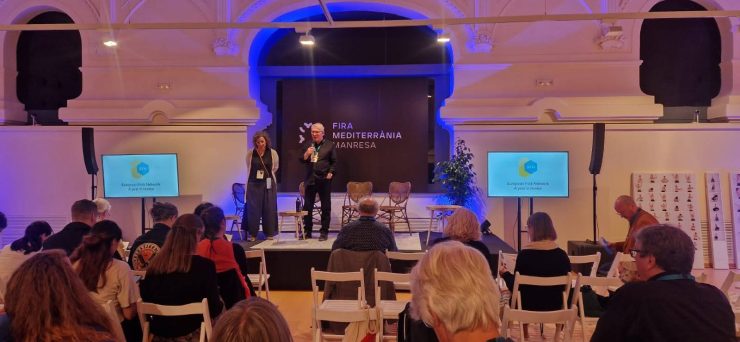
AEC Traditional, Folk, and Global Music (TFG) Working Group Member Laura Poggio represented the AEC at the European Folk Network’s 6th Annual Conference at Fira Mediterrània
From 10–11 October 2025, the Association Européenne des Conservatoires, Académies de Musique et Musikhochschulen (AEC) participated in the European Folk Network’s (EFN) 6th Annual Conference, held in Manresa, Catalonia (Spain), in partnership with Fira Mediterrània de Manresa.
This year’s EFN Conference placed a strong focus on diversity, inclusion, and cultural belonging, reflecting the network’s commitment to strengthening cultural plurality across Europe.
The opening day featured the panel “Diversity and Inclusion”, where speakers addressed topics such as gender balance, migrant inclusion, and equitable representation in the arts. The keynote address by Angharad Cooper (Centre for Music Ecosystems / European Music Council) explored how public policy frameworks can embed inclusion principles into funding structures and institutional practices.
Throughout the conference, participants joined breakout sessions dedicated to EFN’s diversity strategy and future priorities, while networking opportunities and artistic showcases at Fira Mediterrània created spaces for collaboration between cultural networks, institutions, and artists.
The second day highlighted creative realities in the Balkans, discussions on minority languages and cultural belonging, and presentations from Ethno / Jeunesses Musicales International, reinforcing EFN’s vision of folk music as a bridge between generations, communities, and cultures.
For more information about EFN and its partnership with the AEC, visit europeanfolknetwork.com and aec-music.eu.
Ljubljana (Slovenia)
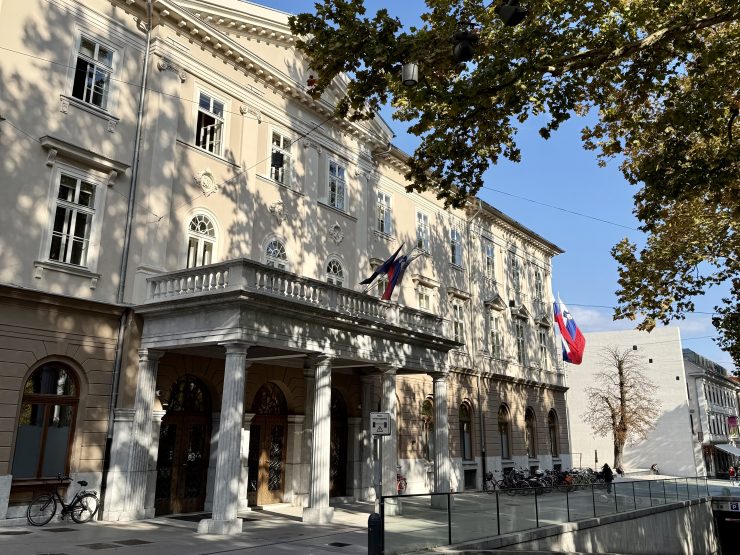
At the invitation of the Slovenian Academy of Music, AEC Director Finn Schumacker attended the Annual Meeting of the Slovenian Music Schools, held at the Academy in Ljubljana.
During the meeting, he provided an update on AEC’s recent activities, including the organisation’s extensive engagement at the European level following the European Commission’s proposal for the next Multiannual Financial Framework (MFF), as well as developments related to the upcoming Culture Compass initiative.
In his address, Finn Schumacker emphasised the importance of strong connections between all institutional levels of music education. Collaboration, he noted, is essential to shaping sustainable policies for the future of music education across Europe.
He also commended the Slovenian music schools for their prominent role in the national music landscape—often serving as cultural hubs for their wider communities. Combined with their affordable tuition fees compared to many other European countries, this reflects key strengths of Slovenian musical life, particularly its commitment to cultural citizenship and inclusiveness.
Prague ( Czech Republic)
Under the title “In the Key of Justice: DEI in Music Education,” the Music Education Policy (MEP) Group – an initiative of the Arts Investment Forum – invited AEC to participate in a symposium in Prague, hosted by the Czech Music Council – National Institute of Culture, in partnership with the Czech Association of Conservatories and the Czech Association of Basic Art Schools.
The symposium aimed to foster global dialogue on music education policy, creating a platform for knowledge exchange and strategic collaboration to strengthen the role of music in education and culture, and to advance equity and access in the sector.
AEC Director Finn Schumacker contributed to a panel discussion alongside representatives from the Czech Ministry of Culture and education experts from Portugal and the United Kingdom, presenting AEC’s ongoing and comprehensive work in the field of Diversity, Equity, and Inclusion (DEI).
Tampere (Finland)
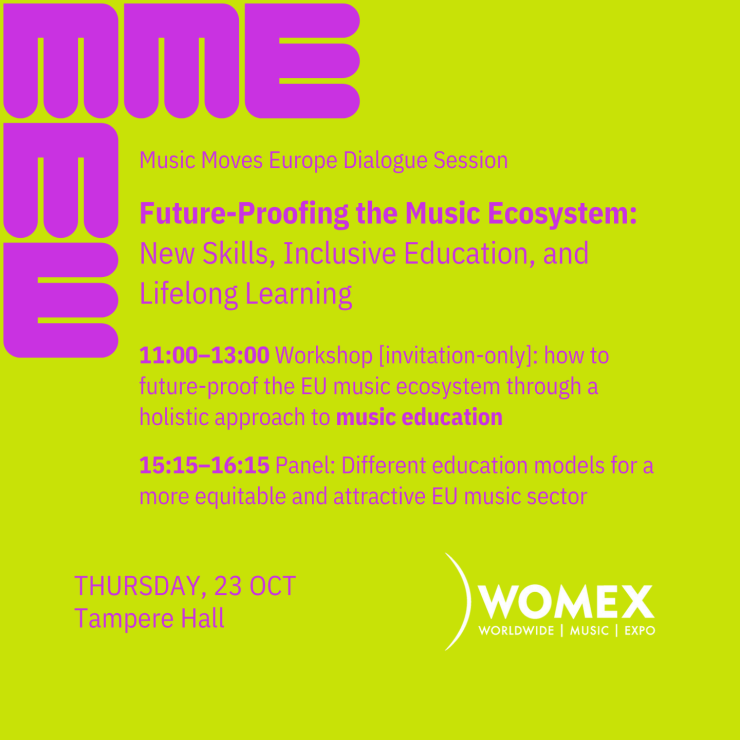
The seventh session of Music Moves Europe (MME) initiative took place in Tampere (Finland) on 23 October 2025 during WOMEX and focused specifically on Music Education under the banner “Future-proofing the music ecosystem: new skills, inclusive education, and lifelong learning.”
AEC Director Finn Schumacker participated in the discussions and underlined the key messages of the AEC: The European music sector consists both of the music industry – with its professional workplaces and focus on career-oriented perspectives – and, on the other hand, of a music life accessible to all segments of the population, where participation and co-creation are key concepts.
The AEC and other music education institutions occupy a central position and contribute to all parts of the musical ecosystem, both through the education of musicians, music creators, and educators, and through artistic research and innovation.
The Music Moves Europe initiative, led by the European Commission, is designed to bolster Europe’s music sector via policy support, funding, regulation and sector-dialogue. As part of its “dialogue with the music sector” strand, MME will host a total of 10 thematic sessions at major music industry conferences across Europe (together with two central EU-level conferences) in the period 2022-2026.
The session in Tampere addressed five distinct perspectives:
- Curriculum of the Future — exploring how educational programmes must evolve to meet changing industry demands.
- How We Learn — examining emerging learning models, both formal and informal, digital, peer-based, and networked.
- Education Without Barriers — emphasising equity, accessibility, and removing systemic obstacles in music education.
- Bridging Formal and Non-Formal Education — seeking ways to connect conservatory/academic training with grassroots, community and non-formal learning paths.
- Lifelong & Intergenerational Learning — recognising that music education must not end with youth, but embrace continuous professional development and inter-generational knowledge exchange.
By spotlighting these themes, the session aimed to galvanise stakeholders in music education and policy to build more inclusive, adaptable and sustainable learning ecosystems, aligning with MME’s broader goals of diversity, competitiveness and resilience in Europe’s music sector.