AEC Advocacy Update: The next EU budget must deliver for culture
The negotiations on the next EU Multiannual Financial Framework are entering a decisive phase. Over the past months, AEC has continued its advocacy work together with European cultural networks and partners to ensure that music, higher arts education, artistic research and the wider cultural ecosystem are properly reflected in the EU budget for 2028–2034.
A particularly important development is the recent presentation of the Cyprus Presidency’s compromise budget proposal, the so-called negotiating box, which will serve as a foundation for the upcoming negotiations between the European Parliament, the Council of the EU and the European Commission.
For the cultural sector, the figures give reason for concern. The Cyprus negotiating box proposes €8.2 billion for AgoraEU in current prices. This is below the European Commission’s proposal of €8.6 billion and significantly below the European Parliament’s proposal of €10.72 billion. If the Commission’s proposed share for the Culture strand were maintained, culture would receive only around €1.7 billion under the Cyprus proposal, compared with €1.8 billion proposed by the Commission and €2.25 billion proposed by the Parliament for music and other cultural sectors.
This is why AEC has co-signed an open letter coordinated by Culture Action Europe calling for increased funding for the Culture strand within AgoraEU. Together with a broad coalition of cultural organisations, we call for culture to receive 25% of the overall AgoraEU programme.
The letter also stresses that the future programme must serve the full diversity of Europe’s cultural ecosystem. This means ensuring that funding is accessible to organisations of different sizes and capacities, that social conditionality and fair working conditions are taken seriously, and that international cultural cooperation is based on fairness, reciprocity and openness.
EU institutions sign Joint Declaration “Europe for Culture – Culture for Europe”
On 18 June 2026, the Presidents of the European Parliament, the Council of the European Union and the European Commission signed the Joint Declaration “Europe for Culture – Culture for Europe” in Brussels, on the sidelines of the European Council.
The declaration was signed by Roberta Metsola, President of the European Parliament, Nikos Christodoulides, President of the Republic of Cyprus, representing the rotating Presidency of the Council of the EU, and Ursula von der Leyen, President of the European Commission.
The Joint Declaration marks an important shared political commitment to place culture at the heart of the European project. It builds on the European Commission’s Culture Compass for Europe and sets out a long-term vision for culture as both a fundamental value in itself and a strategic resource for democracy, resilience, social cohesion, innovation and Europe’s role in the world.
The text is structured around twelve guiding principles for cultural policy in Europe. These include the protection of artistic freedom, cultural and linguistic diversity, access to culture for all, fair and safe working conditions for artists and cultural professionals, youth participation, the connection between culture, arts and education, culture’s contribution to health and wellbeing, ethical and human-centred approaches to AI, cultural heritage, regional development, environmental sustainability and the integration of culture into internal and external EU policies.
For AEC and its members, the declaration is particularly relevant because it explicitly recognises the importance of arts education, young artists, cultural participation, fair working conditions and the role of culture in wider societal development. It also confirms the need to mainstream culture across EU policies and funding instruments.
The signing of the declaration is not the end of the process, but the beginning of an important implementation phase. The next steps linked to the Culture Compass include the establishment of an EU structured dialogue with cultural stakeholders, an AI strategy for the cultural and creative sectors, a proposed EU Artists Charter, a new European Prize for Performing Arts, a State of Culture Report and an EU cultural data hub.
The declaration also comes at a crucial moment in the negotiations on the next EU Multiannual Financial Framework. Its ambitions will only become meaningful if they are matched by adequate resources and accessible funding for Europe’s cultural and creative sectors. AEC will therefore continue to follow the implementation of the declaration closely and continue to advocate for strong support for Higher Music Education in the future EU programmes.
#NamePlaceFund: Open Letter to the Irish Presidency of the Council
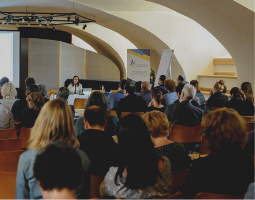
In late June, over 300 representatives of the artistic and cultural research community gathered at the University of Galway for the SAR International Forum on Artistic Research, just days before Ireland assumed the Presidency of the Council of the EU on 1 July. On this occasion, the #NamePlaceFund partners — the Artistic Research Alliance (of which AEC is a member) and Michael Culture Association, together representing some 1,200 institutions across Europe — addressed an Open Letter to the Irish Government. With the trilogue negotiations on the EU’s Multiannual Financial Framework 2028–2034 at a decisive stage, the letter calls on the Irish Presidency to name, place, and fund culture in the next Horizon Europe Programme and the European Competitiveness Fund: adding culture to the title of the Society pillar, securing dedicated structural components and budget lines, and earmarking €5 billion in Horizon Europe and €3 billion in the Competitiveness Fund for culture and the CCSI. Anchoring the arts and the Cultural and Creative Sectors and Industries in the EU’s research, innovation and competitiveness funding is essential to Europe’s creative edge, societal resilience and long-term competitiveness.
Read the full Open Letter.