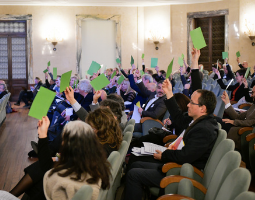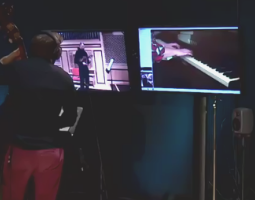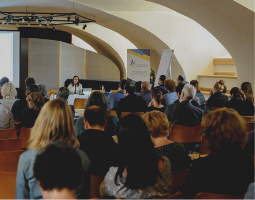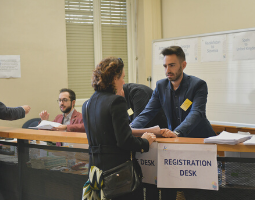
In March 2027, the Royal Conservatoire Antwerp will welcome international students from European partner institutions for a Blended Intensive Programme connected to the International Conference on Live Coding 2027. The conference brings together artists, musicians, dancers, designers, technologists, educators and researchers who use code as a live, performative and collaborative practice. Live coding is a performance artform that uses the skill of writing and changing code in real time, often in front of an audience, to create sound, music, visuals, movement, text, light, interaction etc. It is an experimental and inclusive field where artistic intuition, technological curiosity and collaborative making meet.
The theme of ICLC 2027 is Dialogues: dialogue between coder and machine, performer and audience, sound and image, movement and algorithm, artistic tradition and digital experimentation. Through this BIP, students will have the opportunity to experience this international community from the inside and to explore how their own artistic or technical discipline can converse with code.
Who can apply?
We welcome students from European partner institutions with a background in, or strong curiosity for, one or more of the following fields:
- Music and Sound Arts
Students in classical, jazz, contemporary music, electronic music, composition, sound design or music production who are interested in live-coded scores, improvisation, generative music, real-time audio manipulation, hybrid ensembles or experimental performance.
This may include acoustic musicians, ensemble players, electronic producers, composers, improvisers, sound artists and students working with DAWs, synthesizers, modular systems or other digital tools.
- Dance and Choreography
Students in dance, choreography or performance who are curious about the relationship between movement and code. This may include algorithmic choreography, interactive performance, motion capture, sensors, real-time visuals or the translation of computational thinking into physical gesture.
- Visual Arts, Design and Scenography
Students in digital arts, graphic design, generative art, installation, scenography, lighting design, typography, data visualisation or interactive media. We especially welcome students working with tools such as Processing, p5.js, TouchDesigner, shaders, DMX, projection, immersive environments or other visual and spatial technologies.
- Theatre and Performance
Students in theatre, performance, acting, devising, dramaturgy, stage technology or scenography who are open to exploring live coding in relation to script, narrative, stage design, projection, props, interactive sets or real-time performance structures.
- Computer Science, Creative Coding and Technology
Students with programming or technical skills who want to apply them in artistic, performative or educational contexts. This may include creative coders, students working with Python, JavaScript, SuperCollider, TidalCycles or similar environments, as well as students interested in robotics, physical computing, Arduino, Raspberry Pi, AI, machine learning or generative systems.
- Education and Pedagogy
Students preparing to become music, art, design or technology educators who are interested in live coding as a tool for interactive learning, improvisation, participation, inclusion and community-building.
- Interdisciplinary and Experimental Practices
Students in art & technology, new media, game design, textile design, fashion, design research or other hybrid programmes. We welcome students working across disciplines, for example combining music with generative tools, dance with robotics, live-coded visuals with performance, procedural generation with games, or coded patterns with textile and fashion practices.
We are looking for students who are curious, open-minded and willing to experiment across disciplines. You do not need to be an expert coder. You may come as a musician, dancer, visual artist, performer, designer, educator, programmer or hybrid maker. What matters most is your interest in collaboration, experimentation and real-time creative processes.
What will you do?
During the BIP/the International Conference on Live Coding, students will:
- Observe/take part in workshops, talks, performances and artistic exchanges;
- meet experienced live coders, artists, researchers and educators from an international community;
- explore live coding as a tool for performance, composition, improvisation, design, movement, pedagogy and collaboration;
- connect with students from other European institutions;
- reflect on how live coding can open new forms of artistic dialogue;
- develop ideas for future projects, collaborations or research.
Depending on the final programme, students may encounter examples such as live coding with musicians, jazz combos, string quartet, dancers, visual artists, lighting systems, immersive storytelling, robotics, AI, educational workshops or Algorave practices.
Why join?
This BIP offers a unique opportunity to experience a cutting-edge international conference while actively engaging with artistic and technological experimentation.
You will not only observe: you will be invited to participate, exchange, question and contribute. The programme is designed as a space for mutual learning between students, teachers, artists, coders and researchers.
By joining, you will gain:
- exposure to an international community of live coding practitioners;
- insight into new forms of interdisciplinary artistic practice;
- hands-on experience with code as a performative and collaborative medium;
- inspiration for future artistic, educational or research projects;
- connections with students and professionals across Europe and beyond.
Practical information
- Host institution: Royal Conservatoire Antwerp / AP University of Applied Sciences and Arts
- Location: Antwerp, Belgium
- Dates in Antwerp: 9–13 March 2027
- Virtual date: 2 March 20h online meeting
- Format: Blended Intensive Programme, including an international physical week in Antwerp and an online component
Language: English
Target group: Students from European partner institutions in music, dance, theatre, visual arts, design, technology, education and interdisciplinary arts
ECTS: 3 ECTS
Application deadline: 1 October 2026
Number of places: 15 - Students should contact the international office or BIP coordinator at their home institution to check eligibility for Erasmus+ short mobility funding. If your home institution cannot facilitate this, you unfortunately can’t participate.
How to apply
Please complete this online form to share the following information:
Application form BIP ICLC – Formulier invullen
- your name
- your email
- your institution
- email of your international coordinator
- a short motivation statement explaining why you would like to join this BIP
- a brief description of your artistic, technical or educational background
- any previous experience with coding, digital tools, performance, improvisation or interdisciplinary work, if applicable.
No prior live coding experience is required. Curiosity is essential.