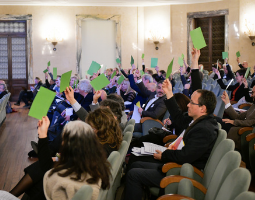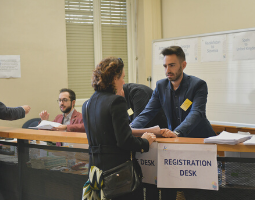
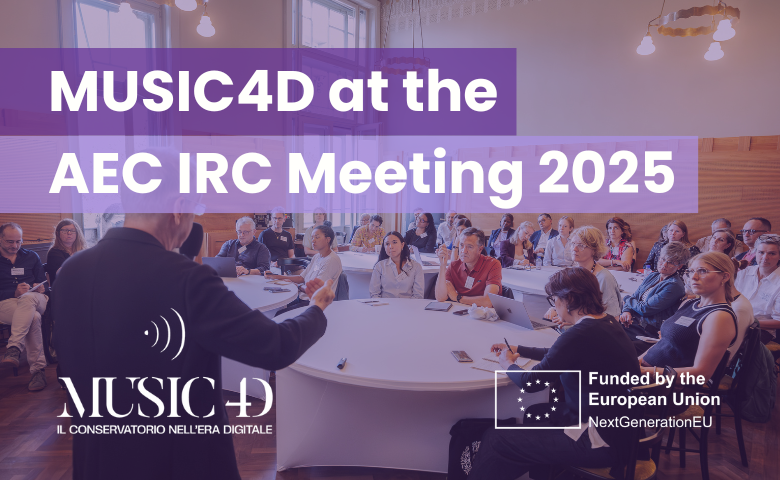
A dedicated session on the Music4D project was featured during the 25th Annual Meeting of International Relations Coordinators (IRC) of the Association Européenne des Conservatoires (AEC), held in Budapest at the prestigious Liszt Academy of Music.
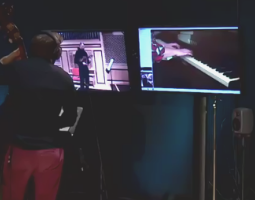
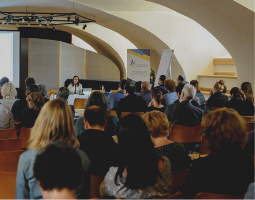
Representing the PNRR (NextGenerationEU) project led by the Alessandro Scarlatti Conservatory of Music in Palermo was its advisor, Michelangelo Galeati, who participated in the session held on Friday, 19 September, entitled “How to move students beyond Europe? The example of the PNRR Project Music4D in Palermo.” During this presentation, M° Galeati introduced the initiative developed to enhance the musical heritage of Southern Italy while fostering innovation through advanced digital technologies such as AR, VR, XR, AI, and robotics.
During the presentation, Michelangelo Galeati highlighted that ” the idea of “phygital hubs” can be game changing across Music HEIs. Creating permanent digital spaces where students can collaborate internationally without leaving their home conservatoires, can significantly reduce the ecological impact of performances but also prepare international experiences.”
A central focus of the Music4D project is mobility. The program has launched a large-scale network of both virtual and physical exchanges, expected to benefit more than 400 direct participants, including students, faculty, and staff—building new, lasting relationships between institutions. Drawing on this experience, the session broadened the discussion to explore opportunities for collaborations beyond the European Union. Participants shared milestones already achieved in international cooperation, including initiatives in Hong Kong, Tirana, Osaka, and Buenos Aires, while exchanging practical strategies on how mobility can enrich artistic training, research, and cultural dialogue in the performing arts.
In today’s interconnected world, no institution can grow in isolation. This awareness has been at the heart of the AEC’s annual meeting, making the Music4D vision particularly relevant to the theme of this year’s edition: “The great compass of mobility: exploration, navigation, and direction in the future of internationalisation.” Over the course of three days, participants engaged in dynamic sessions and discussions, exploring topics such as the integration of artificial intelligence into international offices and gaining hands-on experience in project writing and management.
This year’s special edition celebrated music not only as an art form but also as a universal language of unity, strengthening the role of conservatoires and higher institutes of music education in building a more connected and innovative future.