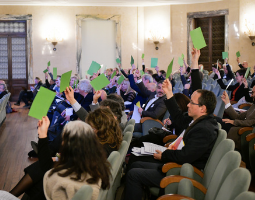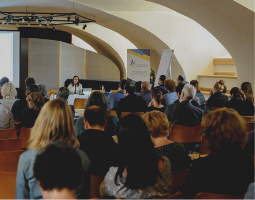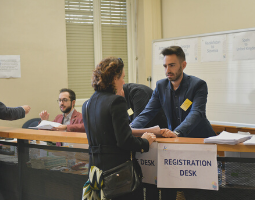
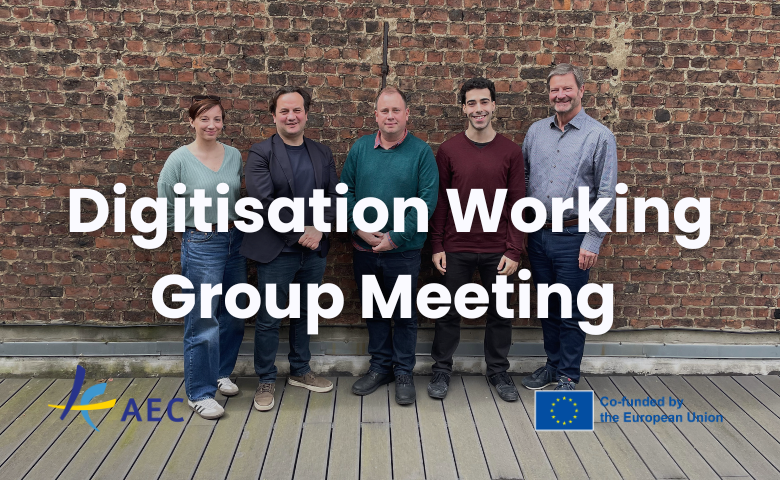
The AEC Digitisation Working Group met in Brussels on 18 and 19 May 2026 for a two-day session bringing together representatives from five member institutions.
The two-day meeting addressed the gap between where conservatoires currently stand and where the industry is heading, and how the working group can help members navigate that transition practically. A recurring theme was the need to embed digital culture into institutions rather than treating it as an add-on, and the risk facing institutions that are not yet engaging with these questions at all.
Central to the discussions was a new benchmarking survey that will allow member institutions to assess their level of digitisation across learning, teaching and leadership. The goal is to give institutions a clearer picture of where they stand and to encourage engagement through that process. Distribution is planned for after summer, with a test run and stakeholder network to be established beforehand. The group also discussed piloting the tool at the AEC Congress and organising a series of thematic webinars with external experts and industry partners.
The second day also included two presentations. Anna Habruk from Conservatorio “Nino Rota” made the case for using AI to streamline administrative tasks rather than in student learning, arguing that automating routine paperwork frees up time and resources for artistic practice. Sara Primiterra from the AEC office presented Easy Mobility Online. EASY is a unique, subject-based platform that harmonizes multinational exchange through a unified yet customizable workflow designed for the media-rich requirements of arts education. It thrives as a collaborative ecosystem, evolving through direct user input and EWP integration to ensure administrative efficiency remains tailored to the specific needs of the arts community.
The discussion that followed touched on AI literacy, curriculum development, copyright and creative responsibility. The group noted that while AI may not immediately change how audiences experience classical music, the parts of musical practice that generate income outside of performance, such as arrangement and production work, are already being affected. Supporting academic studies within conservatoires were also identified as particularly vulnerable. The broader question of what conservatoires are there to preserve and pass on in a rapidly changing landscape remained central throughout.
To ensure these conversations extend beyond the working group, the AEC will soon open a call for individuals to join the Digital Stakeholder Network. Whether you are a seasoned technical expert or a curious newcomer eager to learn, this network will provide a platform to share insights, solve common challenges, and shape the digital future of arts education together.
Thank you to the Working Group members for their work: Thom Gilbert – Royal College of Music, Yaşam Hancılar – Codarts Rotterdam, Daniela Peclová – Janáček Academy of Performing Arts, Pau Vallès Martínez – Escola Superior de Música de Catalunya, Matti Ruippo – Tampere University of Applied Sciences, Anna Habruk – Conservatorio di Musica “Nino Rota” and Finn Schumacker – AEC Office.