



Call for Contributions
AEC Congress 2026 in Hamburg, Germany
“From Institution to Interaction: Responsive Education and Relevant Practices in the Arts”
Deadline for Submissions: 10 June 2026
The AEC invites you to contribute to the AEC Congress 2026, taking place in Hamburg on 4-7 November under the title:
“From Institution to Interaction: Responsive Education and Relevant Practices in the Arts”
How do we, as institutions, engage with the sector, the outside world, and societal and cultural partners in our cities and beyond? How do we prepare students and graduates to become active professionals within a diverse, digitalised and interconnected world? In a complex and evolving cultural landscape, Higher Music Education Institutions must rethink their role—not as isolated centres of expertise, but embracing their place as active, responsive, and connected participants in the glocal cultural ecosystem.
Under the title “From Institutions to Interaction: Responsive Education and Relevant Practices in the Arts”, the AEC Congress 2026 invites participants to explore how conservatoires can foster new relationships between education, artistic practice and society. Through three strands Innovating Classical Music, Comprehensive Learning and Teaching Music, and Leadership and Strategy in the Higher Music Education Sector, the Congress will examine how institutions can embrace innovation, strengthen their professional relevance, support wellbeing and sustainable careers, and lead meaningful change. Together, we will reflect on how to transition from institution to interaction as organisations, teachers, students-and future-ready musicians.
2026 AEC Congress Programme Development and Call for Contributions: Participation First!
Traditionally, the sessions and contributors of the AEC Congress have been almost entirely curated and decided by the AEC Congress Committee. For the 2026 edition, however, and in the spirit of increasing participation and shared ownership, we are opening the shaping of the programme to the wider AEC community to reflect the diversity and dynamism of our sector and give space to a wider pool of voices. At the same time, the AEC reserves the right to directly invite, approach, or encourage specific individuals and organisations to submit proposals in order to ensure a balanced, high-quality, and forward-looking programme.
Submissions are welcome from representatives of AEC member institutions, including students, teaching and research staff, senior leaders, middle managers and international officers. We also encourage proposals from AEC working groups, AEC partner networks, and project consortia that include AEC member institutions. In addition, artists, cultural organisations, researchers, and professionals from the music and wider cultural sectors—such as producers, artistic directors, makers, and technical specialists—are invited to apply, particularly when collaborating with AEC member institutions.
We particularly encourage student-led submissions that elevate student voices and engage with the Congress theme by exploring collective experiences, bold and risk-taking approaches, reflective and analytical thinking, and perspectives that challenge dominant norms. We invite you to share your best practices, institutional initiatives, and alternative viewpoints.
Strands and Topics
Contributions are welcome in the framework of the three main Congress strands and related transversal topics:
1. Innovating Classical Music
This strand explores how higher music education can reimagine the future of classical music by moving from institution to interaction. It invites proposals that connect conservatoires more dynamically with audiences and diverse communities, professions, technologies, societal and artistic partners. In the spirit of responsive education and relevant practices in the arts, this strand focuses on new artistic formats, entrepreneurial realities, digital transformation, and collaborative approaches that prepare musicians for evolving careers and cultural ecosystems.
- New opportunities for classical music
- Conservatoires and the music scene: integrating professional practice into study programmes
- Inspiring and developing the cultural scene with new formats and initiatives
- Artistic research & technology: AI, digitisation, and innovation, collaborations with research centres
- Interdisciplinarity: collaboration with theatre and other art forms, with academic partners, with amateur musical life, and diverse musical communities
- Performance & pedagogy as presence: enriching concert life with new approaches
- Cultural and media management programmes and departments and their role in current developments
2. Comprehensive Learning and Teaching
This strand focuses on how learning and teaching can evolve to support musicians across all stages of life-long development. Moving from institution to interaction means designing learning environments that are connected to real-world practice, responsive to societal change, and open to innovation. In line with responsive education and relevant practices in the arts, this strand welcomes contributions on collaborative and interactive pedagogies, inclusive education, wellbeing, and the development of adaptable skills for lifelong careers.
- Institutional responsibility: engagement in pre-college education, teacher training, and general education
- Sustainable careers: wellbeing, resilience, and long-term perspectives for musicians
- Practical applications of AI in curriculum design, pedagogy, and assessment
- Artistic research & technology in teaching and learning contexts
- Diversity and inclusion: respecting heritages and enhancing cultural interaction
- Decolonial perspectives in music education and institutions, how to relate to and how to create repertoire?
3. Leadership and Strategy in the Music (Education) Sector
This strand addresses the leadership capacities and strategic visions needed for institutions to thrive in a rapidly changing world. Moving from institution to interaction requires leaders who can build partnerships, guide innovation, support people, and position institutions within broader cultural and professional networks. In the context of responsive education and relevant practices in the arts, this strand examines governance, change management, digital strategy, and inclusive leadership for the future of higher music education.
- Leadership development: how to take leadership responsibility —pathways, skills, and strategies
- Strategic collaboration with the cultural sector and external partners
- Managing innovation, AI, and digital transformation
- Diversity, inclusion, and institutional culture – how to foster dialogue and provide space for all perspectives
- Long-term sustainability and organisational resilience
- Collegial and distributed governance: shared leadership models, co-direction, and participatory decision-making structures in higher music education institutions
Participatory Formats and Interactive Elements
In line with the Congress motto—Talk Less, Participate More—we strongly encourage innovative, interactive and participatory delivery formats over traditional lectures. Applicants are invited to choose among the delivery formats and interactive elements listed below, while also being encouraged to propose additional innovative and highly interactive approaches beyond this list. Each proposal must include at least one interactive element.
Delivery Formats
1. Workshops
Workshops offer participants focused, practice-oriented learning opportunities designed to develop new professional skills. They are intensive, hands-on professional development and grounded in evidence-based practices. Workshops should be participant-centred and designed to foster practical takeaways that attendees can apply in their own institutions or teaching contexts. They should contain interactive elements such as role-play, group work, world cafés, simulations, scenario-building / speculative exercises and other creative project elements (see below).
Workshops as Parallel Sessions are scheduled for 75 minutes. Pre-Congress workshops can last up to 3h with half an hour break.
2. Co-creation spaces
A co-creation space is designed to support early-stage empirical or conceptual work, such as emerging research ideas or conceptual frameworks, work in progress, experiments with new tools, or initial reflections on practice. This space encourages constructive dialogue and potential collaboration, offering participants the opportunity to search for formative feedback, refine their ideas and explore partnerships. The space can be designed as a World Café, Fishbowl, Reverse Panel, etc (see below).
This format is suitable for Opening Brainstormings (90 minutes) or Parallel Sessions (75 minutes).
3. Panel Discussions and Round Tables
Panels and Round Tables are meant as a series of coordinated contributions focused on a shared theme. This format brings together multiple perspectives, research findings, or practical innovations from different institutions, regions, or disciplines. The applicant proposes a chair and involves three to five presenters. This format should stimulate discussion and possibly reflect on international and/or cross disciplinary collaborations.
This format is suitable for Parallel Sessions and allows about 10 minutes presentation time per speaker, 10 minutes for the chair to introduce and ask questions to the panellists and 20 minutes for open discussion with the audience for a total of 75 Minutes.
4. Pitch Talks
Inspired by the renowned TED-Talks format, pitch talks offer a vibrant forum for dynamic intellectual exchange. In this session format, experts in a particular field share their expertise through concise, impactful 5 to 7-minutes presentations. Each talk is designed to communicate “ideas worth sharing” — whether through innovative concepts, thought-provoking perspectives, or forward-looking educational practices. The format aims at sparking reflection and dialogue among participants. Most of the session is then driven by audience questions, often upvoted live using tools like Slido or Mentimeter, so the discussion follows what participants actually care about.
Several pitch talks might be grouped in one session according to the topic. While slides are welcome, presenters are encouraged to use visual imagery over text to support their storytelling and message. The session is chaired by a moderator chosen by the AEC.
5. Case Studies Presentations
This traditional format offers the opportunity to present and discuss completed or well-developed work presented as a best practice for the AEC community. The AEC office might group cases according to theme or topic. Each presentation encourages the exchange of ideas and constructive feedback across projects with a shared focus.
This format allows about 15 to 25 minutes presentation time per speaker (according to the number of selected speakers for the session) and time for open discussion with the audience chaired by a moderator chosen by the AEC.
6. Posters
Poster offer a highly interactive format for sharing past, present and future projects and initiatives. This format is ideal for fostering informal, focused dialogue and exchanging ideas with peers in a visual and engaging way. The dynamic is as follows: each presenter gives a brief 5-minute overview of their poster to an audience gathered as a group in front of the poster during informal networking sessions or in any other moment. After all the authors’ brief presentations, an in-depth discussion between them and the audience follows, in an exhibition format, meaning participants can circulate and engage in deeper conversations with the presenters. Posters need to be designed and printed by participants in advance.
Interactive Elements
1. World Café
Participants move between small breakout groups in timed rounds, each focused on a specific question. As they rotate, they build on previous conversations based on notes left from the previous group on the table, thus cross-pollinating ideas. By the end, patterns and insights emerge collectively rather than from a single speaker.
2. Reverse Panel
The audience becomes the panel. A few “experts” sit in the audience, while participants come to the virtual or physical stage to ask questions, share challenges, or offer perspectives. The usual hierarchy flips, making the session feel more like a collective problem-solving space.
3. Role-Play / Simulation
Participants are assigned roles in a realistic scenario—such as negotiating a deal or responding to a crisis—and must act in real time. This format works especially well for leadership, policy, or training contexts, because people learn by doing rather than listening
4. Collaborative Problem-Solving
Participants are grouped and given a real challenge—often submitted in advance. Over a fixed time, they brainstorm, prototype solutions, and present back. The emphasis is on producing something tangible rather than just exchanging ideas.
5. Silent Discussion / Brainwriting
Instead of speaking, participants reply to questions and send inputs on online platforms such as Mentimeter and Slido or write responses to prompts (in shared docs or boards like Miro). Others build on those ideas in writing. This format surfaces quieter voices and often leads to more thoughtful contributions.
6. Fishbowl Discussion
A small group actively discusses a topic while everyone else listens, with the option to join in at any point of time. The facilitator begins by introducing the topic and inviting a few participants into the “inner circle,” to talk. After listening first, audience members might decide to actively take part in the debate by joining the “inner circle” while initial speakers leave and join the silent audience.
7. Debate with Audience Switching Sides
Two sides argue opposing views, but participants can switch sides during the session if they’re persuaded. This creates a dynamic, reflective environment where changing your mind is visible and encouraged.
8. Body-based practices and artistic elements
Applicants might consider including as well body-based practices and artistic elements into their session to transform them from talk-driven formats into more immersive, participatory experiences. For example, a session might include an embodied dialogue, where participants respond to questions through movement or posture before speaking, or a guided well-being journey that uses breathing and mindfulness to deepen reflection on a topic. Artistic elements can further enrich this dynamic: a co-created live performance might weave participants’ words into music or spoken word, while a forum theatre scene invites attendees to step in and reshape a narrative in real time. Even simple interventions—like a collective gesture to open a session or a live visual artwork evolving from audience input—can shift the atmosphere. Together, these approaches engage people intellectually, physically, and emotionally, creating more memorable, inclusive, and impactful conference experiences.
Types of Sessions
The Call is open for contributions to the following sessions:
1. Pre-Congress Workshops (Thursday morning) – 90 min to 3 hours (with break)
Pre-Congress Workshops are in-depth, hands-on sessions designed to allow participants to explore specific topics in greater detail prior to the main programme. These extended formats (ranging from 90 minutes to 3 hours, including a break where applicable) are intended to support active learning, skills development, and collaborative problem-solving. Facilitators are encouraged to design highly interactive experiences that may include group exercises, case studies, simulations, or other participatory methods that foster engagement and practical application.
2. Opening Brainstorming (Thursday afternoon) – 90 min
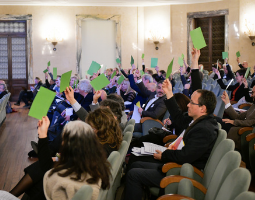
The Opening Brainstorming session sets the tone for the Congress by bringing participants together in a dynamic, interactive environment focused on idea generation and collective reflection. Over 90 minutes, contributors are invited to facilitate open discussions that surface key challenges, emerging trends, and shared priorities related to the Congress themes. The format should prioritize participation, encouraging dialogue, co-creation, and the exchange of diverse perspectives across disciplines and roles.
3. Parallel Sessions (Friday) – 75 min
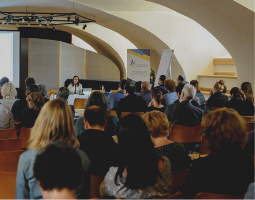
Parallel Sessions consist of 3 sets of 6 concurrent 75-minute sessions (18 sessions in total), offering participants a diverse and structured programme of thematic options throughout the day. Each time slot includes sessions representing all three Congress strands, ensuring a balanced and interdisciplinary distribution of topics. Contributors are encouraged to design engaging and interactive formats that go beyond traditional presentations, incorporating elements such as facilitated discussion, Q&A, case-based exploration, or participatory activities. This structure is intended to foster cross-strand dialogue, maximise choice for participants, and promote dynamic exchange of ideas across the Congress themes.
4. Posters (throughout the Congress and at Information Market) – ongoing dialogue and informal interaction during the event
Poster presentations provide an open and flexible format for sharing institution-based research, projects, or initiatives throughout the Congress. Rather than a fixed presentation slot, posters support continuous, informal engagement, allowing presenters and attendees to interact during networking moments throughout the event. This format is intended to stimulate dialogue, networking, and feedback, with presenters encouraged to be available for discussion during breaks and to use their posters as a focal point for meaningful exchange. Proposals for posters can be combined with proposals for Information Forum (to be submitted via the Registration Form during the online registration process). Please note that personal initiatives and research projects are not eligible either for Posters or for the Information Forum.
How to Apply
Application Form and Information
Contributions should be submitted via this Google Form, aimed at collecting the following information:
- Title of the session
- Names and affiliations of speakers
- Contacts of the speakers
- Strand and Topic/s
- Delivery Format/s and Interactive Element/s
- Type of Session
- 500 words abstract describing the content of the session
- 250 words biography and picture of the speaker/s or working group
- Expected outcomes and key takeaways
- Target audience
- Technical and Room layout requirements
- Any other remark
Only submissions sent via the official Google Form by the deadline will be considered.
For any question on the Call, please mail Sara Primiterra, AEC Senior Manager Events and Projects at events@aec-music.eu.
Deadline: 10th June, expected results: end of June
Who can apply
- AEC member institutions
- Teachers and staff employed in AEC member institutions
- Students enrolled in AEC member institutions
- AEC Working Groups and Task Forces
- AEC partner networks
- Project consortia involving AEC member institutions
- Cultural organisations and music industry representatives working in cooperation with AEC member institutions
Selection Criteria
Proposals will be selected based on:
- Relevance to the Congress theme and strands
- Level of interaction and audience engagement
- Innovation and originality
- Diversity of perspectives and contributors
- Clarity and feasibility of the proposal
Proposal will be evaluated by the Congress Committee and AEC office.