Thursday 9 April
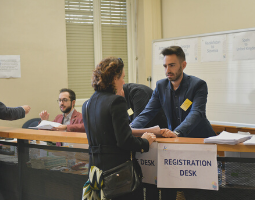
Registration - informal networking
Pre conference introductory session to the EPARM and its work
Lunch
Opening event
Music:
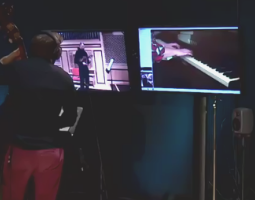
FlytPunkt.no.2 – For violin and machine learned player piano (2025)
Composed by Anders Tveit
Performed by Victoria Johnson
Alone Together (1932)
Composed by Arthur Schwarz
Performed by Lage Lund
Workers Union (1975)
Composed by Louis Andriessen
Performed by students and teachers, led by Kjell Tore Innervik
Keynote speech - Sigurd Hverven - "Beyond Recognition: Acknowledging Nonhuman Nature". In musical dialogue with Anja Lauvdal.
Music:
Havgaver (2025)
Composed and improvised by Anja Lauvdal
Performed by Anja Lauvdal
—
This talk draws a distinction between two concepts: recognition and acknowledgement. I use both terms in a technical sense that is related to, but not identical with, their everyday meanings.
By recognition I mean a form of affirmation that presupposes reciprocity and symmetry. To recognize another being, in this sense, is to recognize them as capable of recognizing you in return. Recognition therefore presupposes a certain degree of shared capacities between the participants in the relation.
Acknowledgement, by contrast, refers to a form of affirmation that does not require reciprocity. One party may acknowledge the other without being acknowledged in return. Such relations are asymmetrical, and the relevant capacities may be unevenly distributed or even absent on one side. Yet something is nevertheless present in the other that calls for acknowledgement: at minimum a form of activity or difference that makes a difference in the world.
My topic is the possibility of recognition or acknowledgement in relation to what I call nonhuman nature – species and organisms other than humans, as well as landscapes largely shaped by them. Can humans recognize nonhuman nature? Or can we rather acknowledge it?
These questions arise at the intersection of environmental philosophy and social philosophy. Environmental ethics has often argued that a non-dominant relationship to nature requires recognizing the intrinsic value of nonhuman beings. Yet this notion often appears as little more than an unsupported intuition. Recognition theory, developed in the tradition of Hegel, offers a powerful account of how we come to understand the value of others and why we are motivated to respect it. However, in its classical formulations recognition is restricted to relations between humans.
I suggest that this limitation points toward the need for another concept: acknowledgement. Drawing on environmental philosophy and thinkers such as Val Plumwood, I argue that acknowledgement may help articulate meaningful relations between humans and nonhuman nature without presupposing reciprocity. A key element of such acknowledgement may be wonder, understood as a boundary experience that makes us aware of the limits of what we can understand and recognize in our own terms, while reminding us that something nevertheless exists beyond those limits and may call for respect.
Sigurd Hverven holds a PhD in philosophy from the Norwegian University of Science and Technology (NTNU) and works as a researcher in ethics, environmental philosophy, and ecotheology at the Faculty of Theology, University of Oslo.
His work spans environmental ethics, philosophy of nature, the history of philosophy, political philosophy, and the philosophy of childhood. Alongside his academic research, he has extensive experience communicating philosophy to wider audiences through radio, newspapers, short films, lectures, panel discussions, and school visits.
He is the author of four books: Naturfilosofi (2018), Ville verdier: Naturfilosofi i menneskets tidsalder (2023), Hegel: En ganske enkel bok om en vanskelig filosof (2024) and Så setter vi oss på huk: Filosofi på høyde med barn (2025).
He received the Skjervheim Prize in 2024, and his book on Hegel was awarded the Norwegian Critics’ Prize the same year. He has also been named one of Norway’s ten best writers under 35 by Morgenbladet and the Norwegian Festival of Literature.
https://www.tf.uio.no/english/people/aca/sigurdhv/
Coffee break
Research Presentations I (click to check abstract and bio)
Break to allow room change
Research Presentations II (click to check abstract and bio)
Open Space - Themed discussion chaired by Stephen Broad (EPARM WG)
Concert
Programme:
Wake Up! (2013)
Composer: Tilmann Dehnhard
Elizabeth Sofia Salerno – Flute
—————
Sola fløyter åsen
Sevlen brote sond
Composers: Anne Hytta/trad/Straum, Stille
Spelemannslaget Straum, Stille / Hardanger fiddlers team: Anne Hytta, Gro Marie Svidal, Håkon Høgemo, Sindre Tronrud, Sivert Holmen
——————————
«Nel dolce tempo» (Naples, 1708)
Cantata for voice and continuo
Composer: George Frideric Handel (1685-1759)
Marianne Beate Kielland – voice
Christian Kjos – harpsichord
——————————
FlytPunkt – For violin and machine learned Live electronics (2024/25)
Composer: Anders Tveit
Victoria Johnson – Violin
———————————
What I Need (2026)
Repulsive Love (2026)
Composed/written and performed by
Live Hanken – artist and student.
——————————————————
Octet for strings (1825)
1.st movement:Allegro moderato ma con fuoco
Composer: Felix Mendelssohn-Bartholdy (1809-1847)
Henning Kraggerud, Alma Serafin Kraggerud, Fanny Hjort, Rebecca Nøstrud Grimstad,Vårin Lie Rognes, Andreas Nøstrud Grimstad, Franz Serafin Kraggerud, Vigo Vajk Sagvik
Reception
Friday 10 April
Information Forum
Music:
- Prolog
- Passacaglia
Composed by Egil Hovland
Performed by Anders Eidstein Dahl (Organ)
Coffee Break + Information Market
Round Table - Tipping Point. Accelerating collaboration in the expanding artistic research community.
Music:
Cellotronics (2026) by Tanja Orning
Tanja Orning – Cello
—
Tipping Point. Accelerating collaboration in the expanding artistic research community.
Artistic research is no longer a newcomer. Although there are considerable differences between countries and institutions, doing artistic research has become an integral part of educational programmes and curricula across higher music education in Europe. The growing number of applications for the annual EPARM conferences shows that the field can rely on an expanding community that has reached critical mass, acting as a catalyst for in-depth and far-reaching collaboration. As recent European and international initiatives demonstrate, there is a strong and shared desire to exchange experiences and expertise, and to join forces in developing sustainable research programmes and infrastructures.
This roundtable discussion aims to reflect on the potential and consequences of the current appetite for collaboration. Does increasing exchange also require developing common criteria for conducting AR? Will collaboration risk the homogenization of the field, or cause a deepening of the current divisions between specific visions and approaches? Can critical mass, combined with increased mobility, also lead to more self-critical reflexes? And to what extent do individual students and researchers benefit from the involvement of higher music education institutions in transnational collaborative projects?
Following up on the ARE-webinars curated by the EPARM working group since last year, this interactive session invites reflection on the role of exchange and collaboration between artistic research programmes and initiatives, and more specifically, suggestions on how EPARM can support collaborative developments in this area.
Panel:
Barbara Lüneburg – Bruckner University (Linz, Austria)
Morten Qvenild – Norwegian Academy of Music (Oslo, Norway)
Theodore Parker – EPARM WG and Estonian Academy of Music and Theatre (Tallin, Estonia)
Therese Kaufmann – mdw – University of Music and Performing Arts (Vienna, Austria)
Paul Craenen (moderator) – EPARM WG and Royal Conservatoire (The Hague, The Netherlands)
Lunch
Research performances I (click to check abstract and bio)
Break to allow room change
Research presentations III (click to check abstract and bio)
Coffee break
Research performances II (click to check abstract and bio)
Break to allow room change
Research presentations IV (click to check abstract and bio)
Break to allow room change
Research performances III (click to check abstract and bio)
Concert walk - Guided tour of the academy (optional) - Meeting point: registration desk
Dinner
Artistic research fellow Sean Bell performs John Dowland