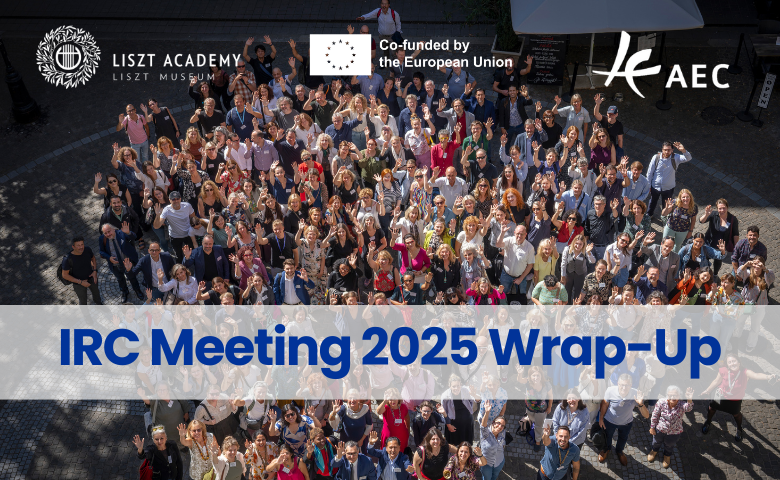
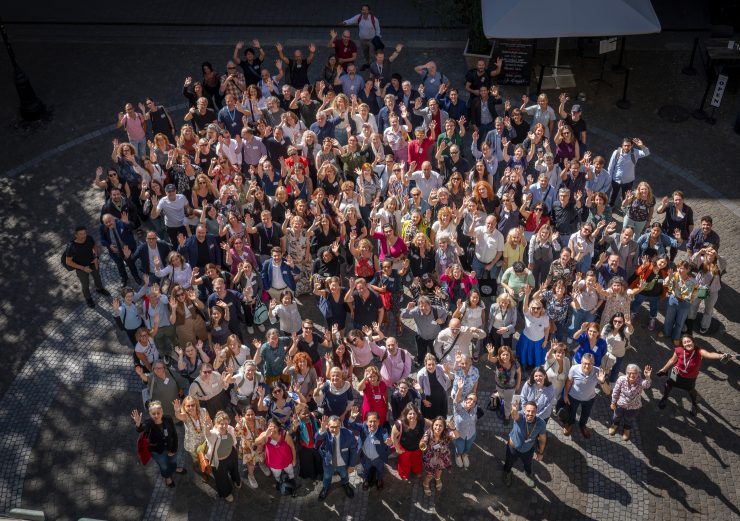
This year, the AEC Annual Meeting for International Relations Coordinators (IRC) 2025 celebrated a major milestone: its 25th edition! The event was held from the 17th to the 20th of September at the Liszt Academy of Music in Budapest (Hungary), bringing together more than 250 participants from 40 countries in person for a rich programme of workshops, discussions, and networking sessions around the theme The Great Mobility Compass: Exploration, Navigation, and Direction in the Future of Internationalisation.
Wednesday, 17th September
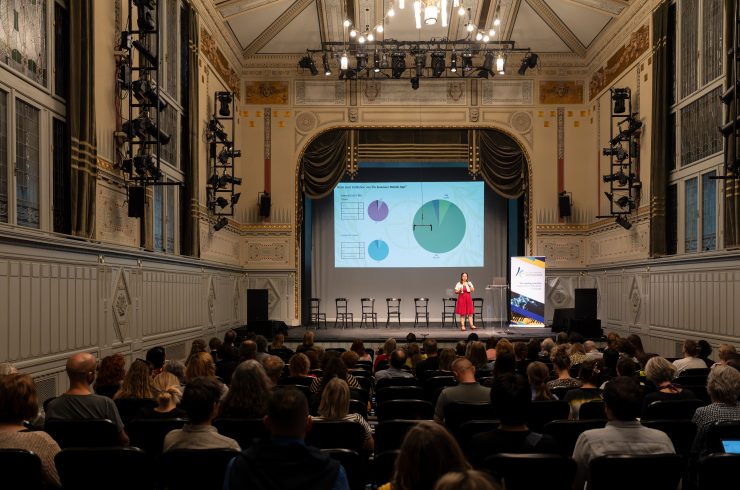
On Wednesday afternoon, attendees actively engaged in the pre-conference workshop, “Navigating the Digitisation of Erasmus+ Procedures,” which offered a comprehensive update on the current state and future directions of the digitisation of the Erasmus Process for higher music education institutions, focusing on Erasmus Without Paper (EWP) and the AEC EASY MO System.
© Picture by János Posztós
After a plenary presentation presenting data from the sector, participants divided into three groups: one for beginners on EASY MO General Logic and Process, another one for EASY MO advanced user and a third one on matters related to EWP and Dashboard. The first day concluded with a Plenary Consultation involving the AEC office and the EASY MO Task Force, with Q&A with institutions interested in joining the new consortium in 2026.
Thursday, 18th September
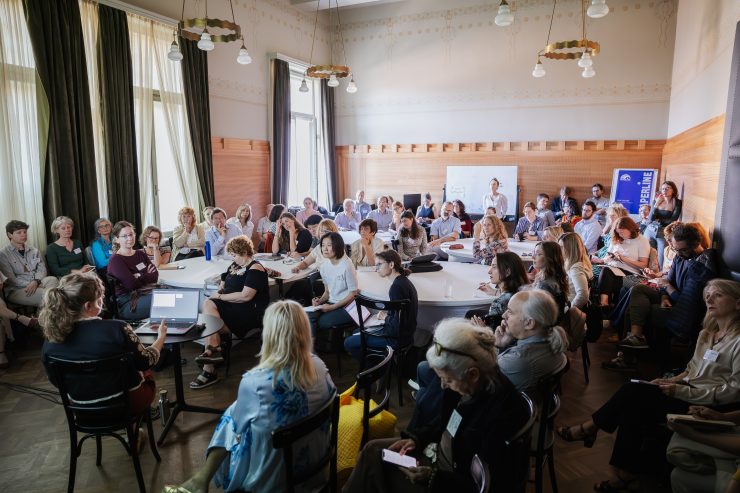
Thursday morning, participants had the chance to join two pre-conference workshops: “Exploring Erasmus+ Mobility,” led by IRC Working Group member Anika Stiawa, and “Exploring Funding Opportunities,” featuring Michelangelo Galeati who spoke about the Creative Europe funding opportunities,, Salvatore Gioveni who gave a presentation on the Erasmus KA2 HarMA Hub project, and Iveri Kekenadze Gustafsson from the IRC Working Group who presented several funding programmes such as KA171 and Marie Curie. Both workshops have been highly interactive, with active engagement of participants.
© Picture by Nagy Attila
Afterwards, newcomers to the conference were welcomed in a dedicated session led by Sarah Low and Ivana Mijanovic, which provided an introduction to the full range of activities organised by the AEC and launched our brand new Buddy System for IRCs.
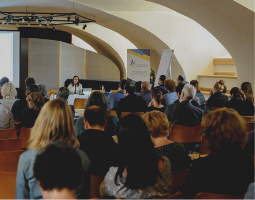
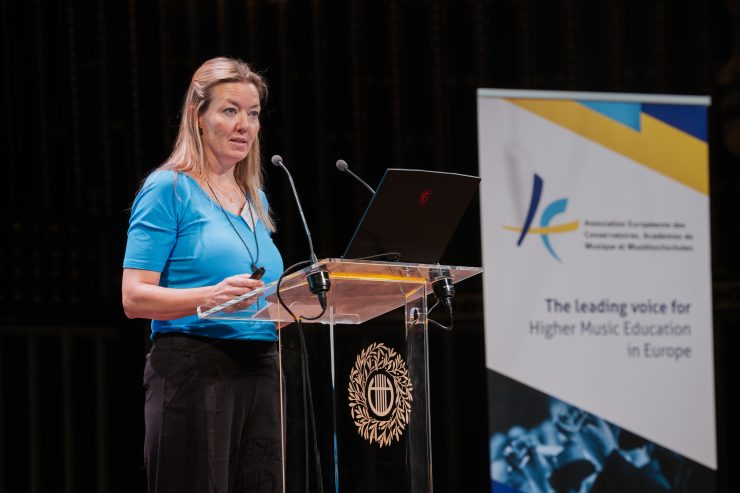
A pivotal moment of the day was the first AEC Talk, delivered by Tone Jordhus, Co-Secretary General of IN.TUNE and Head of Division at the Norwegian Academy of Music (NMH). Titled “Charting Currents of Change: IN.TUNE’s Compass for Collaborative Innovation,” the keynote introduced participants to the IN.TUNE European University Alliance, the first European University Alliance in the field of music.
© Picture by Nagy Attila
By highlighting how cross-institutional partnerships serve as a strategic model for joint educational formats, Tone explored the benefits of such collaborations – particularly how they foster curriculum innovation and help align Higher Music Education with the rapidly evolving needs of the profession and society.
In the afternoon, parallel sessions explored a variety of topics, including:
- Project Evaluation – Do’s and Don’ts: Cracking the EU Code
- Artificial Intelligence: from Curiosity to Everyday Use
- Student Wellbeing and Health Promotion in Tertiary Music Education
- BIPs Toolkits
The day concluded with a welcome reception at the Corinthia Hotel, giving participants an opportunity to connect and exchange ideas, wrapping up the day beautifully with a cake to celebrate the 25th anniversary of the IRC Meeting.
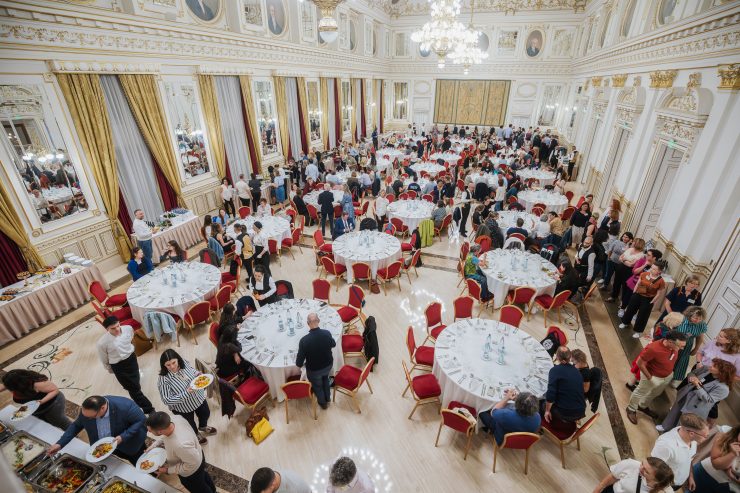
© Picture by Nagy Attila
Friday, 19th September
Friday kicked off with the second AEC Talk, titled “Direction: Africa! A Successful Erasmus+ KA171 Journey between Mozambique and Italy,” delivered by our special guest from Mozambique Stella Mendoça (Director of Fundação MUSIARTE – Conservatório de Música e Arte Dramática, Maputo) and Damiano Lazzaron (IRC at Conservatorio “A. Steffani,” Castelfranco Veneto), introduced by AEC Council Member Keld Hosbond and the IRC wg member Riccardo Mascia. The talk explored how the Erasmus+ KA171 collaboration between MUSIARTE (Mozambique) and the Agostino Steffani Conservatory of Music (Italy) serves as a compelling example of how partnerships with Africa are shaping the future of international higher music education. This dynamic exchange has facilitated meaningful academic and artistic mobility, joint curriculum development, and mutual capacity building, highlighting the vital role of European institutions as co-creators of global educational excellence.
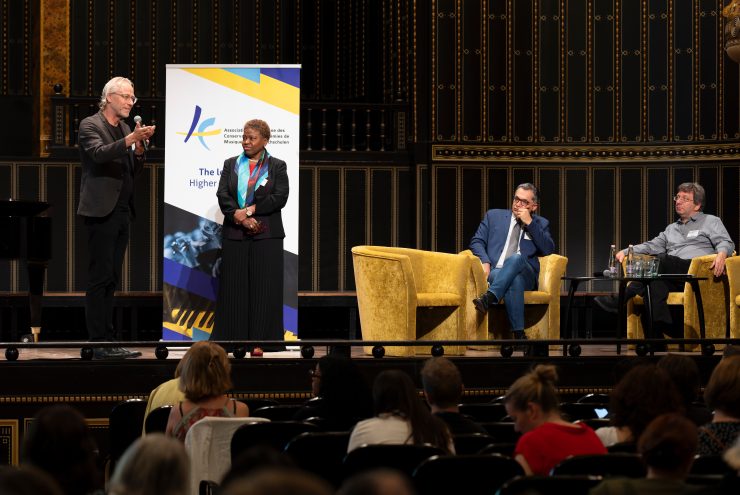
© Picture by János Posztós
This session was followed by an update on the EASY MO system and the Information Forum, where a variety of international initiatives were presented, including:
- Erasmus Orchestra, by INDIRE, Italy
- IncluMusic final conference in Cluj Napoca, Romania
- PNRR Project ROLE in Padova, Italy
- Green Travel Incentive for AEC events & other sustainable practices
- BIP: CELLO SPRING 2025 in Krakow, Poland
- What’s Cooking at the Royal Conservatoire in Antwerp, Belgium
- The Erasmus+ KA171 Project “MMM Mediterranean Sub-Saharan Music Movement” in Palermo, Italy
- Road to Conservatorio Cimarosa in Avellino, Italy: One Year of Projects and Dreams
- MusiQuE – Music Quality Enhancement
- Jerus-It-ARTS, Between Italy and the Holy Land in Bologna, Italy
- The Creation of a World Conference: Academic Exchange, Internationalization, and Sustainable Historical Heritage in Ravenna, Italy
Following the presentations, participants took part in an Information Market, providing additional opportunities for networking and collaboration around the projects showcased.
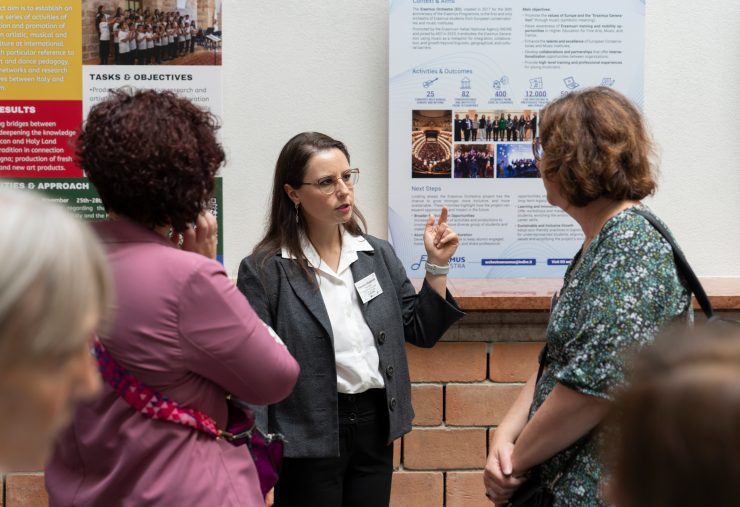
In the afternoon, breakout discussion groups explored a range of topics, including project writing, international internships, grade conversion, international student well-being, Erasmus+ general questions, IRCs’ use of AI, and student mobility beyond Europe, illustrated through exemplary initiatives such as the PNRR project Music4D in Palermo.
The afternoon was brought to life with a networking activity, featuring a guided tour of Budapest’s historical centre, followed by a cruise on the Danube River. The evening concluded in style with a concert performed by the ERASMUS Orchestra. Conducted by Maestro Elio Orciuolo from “Nino Rota” Conservatoire in Monopoli, Italy, more than 50 talented young musicians – selected from conservatoires across Erasmus+ countries – performed a rich and inspiring programme, featuring pieces by Bartók, Brahms, Elgar, Giordano, and Puccini. Prior to the concert, students Ana Habruk (Ukraine), Mateusz Woch (Poland) and Sara Harutyunyan (Armenia) took the floor to tell the audience how the Erasmus programme had changed their lives.
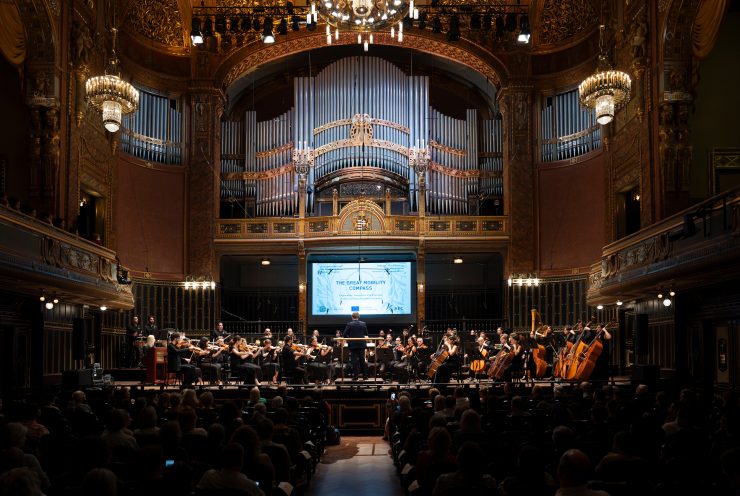
© Picture by János Posztós
Saturday, 20th September
The final day began with an inspiring panel discussion titled “Direction: Open Waters! The Currents of Mobility”, led by the IRC Working Group, the session presented insights from a survey of the AEC’s IRC Community on mobility trends, followed by the presentation of the Renewed IRC Manifesto 2025 by the new IRC Working Group.
Participants then reconvened for group reflections on the event, offering feedback and suggestions to guide the AEC’s future work on international relations.
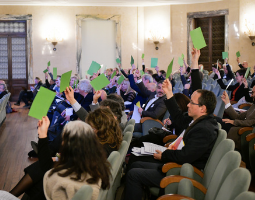
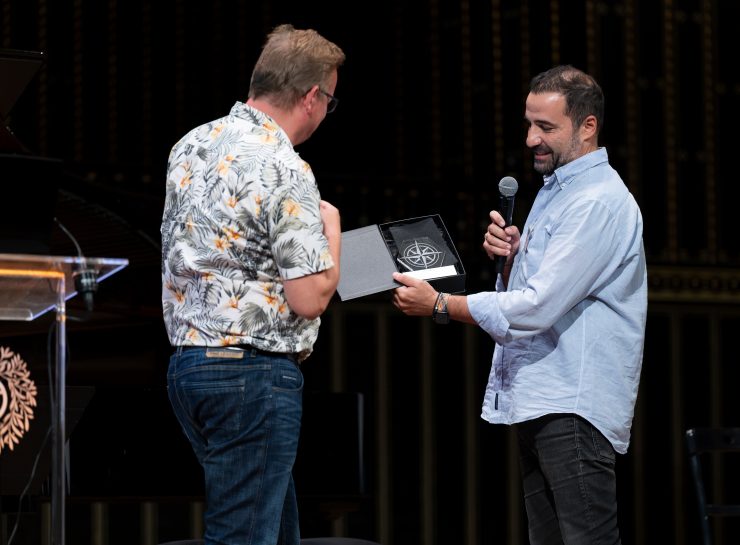
The 2025 IRC Annual Meeting concluded with a closing session, during which the baton of IRC Working Group Chair was passed from Jan-Gerd Krüger to Dimitrios Marinos of the Athens Conservatory. We extend our deepest gratitude to Jan-Gerd Krüger for his years of dedication and commitment, and warmly welcome Dimitrios Marinos as the new chair. It was also announced that the next IRC Annual Meeting will be hosted by the Conservatorio di Musica “F.A. Bonporti” in Trento, Italy, from 2 to 5 September 2026.
© Picture by János Posztós
AEC sincerely thanks the Liszt Ferenc Academy of Music, the IRC and EASY Working Groups, the speakers, and all participants for making this year’s meeting such a success. We look forward to continuing our collaboration to create more inclusive and accessible environments for everyone in Higher Music Education.
© Picture by János Posztós