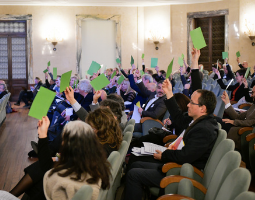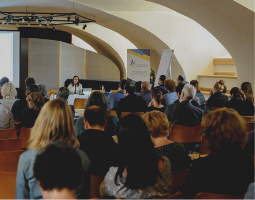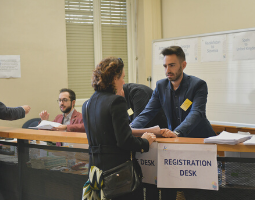






Wednesday 5 November
Registration pre-Congress workshops
Pre-Congress Workshop – MusiQuE Peer Reviewers Training - FOR REGISTERED PARTICIPANTS ONLY (Separate registration needed)
SEPARATE REGISTRATION and fee payment apply
This three-day workshop offers training and professional development for potential and current MusiQuE Peer Reviewers. The training consists of one online session followed by two in-person days. Participants will be guided through all key phases of a MusiQuE review: reading and analysing the Self-Evaluation Report (SER), preparing for and conducting a site visit, and drafting the final review report. Interactive methods such as role play, group work, discussions, and the World Café will be used throughout, ensuring an engaging and collaborative learning experience.
The training is open to representatives and students from higher music education institutions, representatives of music schools and organisations from the music profession with an interest in quality assurance and accreditation in conservatoires. Representatives from performative arts departments affiliated to higher music education institutions are also invited to participate in the training.
Dates:
- Thursday, 16 October (10:00-13:00 CEST) online session via Zoom;
- Wednesday 5th November (13:30 – 18:00 CET) and Thursday 6th November (09:30 – 13:30 CET) in person at the University Mozarteum, Salzburg, Austria.
For details on the training programme and to register, please visit https://musique-qe.eu/events/musique-peer-reviewers-training/musique-training-2025-aec-congress/
Working dinner for MusiQuE Pre-Congress Participants only
MusiQuE Workshop – Abstract Translation in French, German, Italian
Pre-Congress Workshop – DEI - Diversity, Equity and Inclusion in Higher Music Education: An Invitation for Action - FOR REGISTERED PARTICIPANTS ONLY (Separate registration needed)
SEPARATE REGISTRATION at this form
Facilitated by members of the AEC Diversity, Equity and Inclusion (DEI) Panel of Experts:
- Dr. Jennie Henley (Royal Northern College of Music, Manchester)
- Xiangning Lin (National University of Singapore, Singapore)
- Enric Aragonès Jové (Escola Superior de Música de Catalunya, Barcelona)
- Alfonso Guerra (European Association of Conservatoires, Brussels)
Target: representatives from the hosting institution (staff and students) + participants at the AEC Congress 2025 (max. 50 seats)
Format: combination of group activities, presentations, world café and digital interactions
Level of interaction: medium-high
As part of AEC’s commitment to promoting Diversity, Equity and Inclusion (DEI) as fundamental priorities within Higher Music Education (HME) institutions, the DEI Panel of Experts is facilitating a series of workshops under AEC’s new Creative Europe funding period (2025–2028). These workshops aim to share experiences, identify good practices, and collaboratively envision institutional change in relation to DEI in HME. They also seek to address imbalances related to gender, ethnicity, disability, neurodivergence, sexual orientation, economic background, political and religious beliefs, and all other intersecting dimensions.
The AEC DEI Panel of Experts acknowledges that issues related to equitable and inclusive teaching and learning environments have rapidly diversified in recent years due to various local and global challenges and trends. This necessitates space and time for collegial reflection on how institutions are navigating—or wish to navigate—such changes in a future-oriented way.
The workshop will provide an opportunity for HME staff and students to discuss how to build and maintain equitable and inclusive practices, and how such practices can support previously excluded individuals, minority groups and communities. Drawing on the resource package launched in 2023, titled Diversity, Equity and Inclusion in Higher Music Education: An Invitation for Action, the workshop will place a particular focus on addressing resistance that may emerge when such changes are envisioned and implemented in the institutions.
The workshop will consist of plenary sessions as well as small group discussions in a world café setting, with the ultimate goal of encouraging participants to take action to enhance DEI within their own institutions.
DEI Workshop – Abstract Translation in French, German and Italian
Registration link: https://forms.gle/Y7uhUcb8rPNoBaVPA
Thursday 6 November
Registration pre-Congress workshops
Continuation of the Pre-Congress Workshop – MusiQuE Peer Reviewers Training
SEPARATE REGISTRATION and fee payment at Training workshop organised by MusiQuE – Music Quality Enhancement
This three-day workshop offers training and professional development for potential and current MusiQuE Peer Reviewers. The training consists of one online session followed by two in-person days. Participants will be guided through all key phases of a MusiQuE review: reading and analysing the Self-Evaluation Report (SER), preparing for and conducting a site visit, and drafting the final review report. Interactive methods such as role play, group work, discussions, and the World Café will be used throughout, ensuring an engaging and collaborative learning experience.
The training is open to representatives and students from higher music education institutions, representatives of music schools and organisations from the music profession with an interest in quality assurance and accreditation in conservatoires. Representatives from performative arts departments affiliated to higher music education institutions are also invited to participate in the training.
Dates:
- Thursday, 16 October (10:00-13:00 CEST) online session via Zoom;
- Wednesday 5th November (13:30 – 18:00 CET) and Thursday 6th November (09:30 – 13:30 CET) in person at the University Mozarteum, Salzburg, Austria.
For details on the training programme and to register, please visit https://musique-qe.eu/events/musique-peer-reviewers-training/musique-training-2025-aec-congress/
MusiQuE Workshop – Abstract Translation in French, German, Italian
Pre-Congress Workshops (please check the description to see exact time and location)
Pre-Congress Workshop in collaboration with YMTE
9:30 – 13:00
Workshop Overview:
The Bologna process established competence-based education with agreed-upon learning outcomes for music studies within Higher Music Education (HME) institutions in Europe. However, pre-college music education lacks a standardised approach. The Polifonia pre-college working group suggested back in 2007 competences aligned with HME outcomes, serving as a theoretical model requiring further development. In the framework of an Erasmus+ project YMTE and AEC now pick up on that need.
The project endeavours to establish a European reference framework and ensure quality assurance for the specialized pre-college level of music education, fostering a cohesive curricular alignment between pre-college music education and higher music education. It seeks to pinpoint, deliberate, and establish key competences, learning outcomes, and standardized quality measures that strengthen the interconnection between the levels of musical education.
The workshop offers participants the opportunity to gain insight into the project, including the preliminary results of a comprehensive mapping of learning outcomes and admission requirements from institutions across Europe.
Based on this, participants are invited to reflect, share personal experience and together formulate recommended measures that can be put in place to reduce barriers and to strengthen diversity, equity, and inclusion in the transition between pre-college music education and higher music education.
This workshop will be run in English.
Workshop Format:
The workshop will be designed as a combination of presentations, case study analysis and small group discussions (Delphi rounds):
- Welcome & Context Setting
- Presentation and Case Study Snapshots
- Delphi Round 1 – Small Group Discussions
- Plenary Sharing & Consolidation
- Delphi Round 2 – Prioritisation & Refinement
- Final Validation & Next Steps
- Closing Reflections
Workshop content:
The workshop contains a presentation of the current YMTE Erasmus+ project, a short introduction to the Polifonia Report on Pre-college Music Education in Europe and highlights from the ongoing mapping and analysis of pre-college music education and higher music education across Europe (HME).
During a combination of group discussions and plenary sessions, participants will identify desired (including emerging) competences, engage in critical discussion, and formulate recommendations regarding enhanced DEI, competences and corresponding learning outcomes.
Expected Outcomes:
By the end of the workshop, participants will have gained a deeper understanding of the barriers within the musical ecosystem, as well as their roots in tradition and established practices. Through their engagement in the workshop’s analyses and discussions, participants will have made a significant contribution to fostering stronger connections between educational levels and promoting more diverse participation. Ultimately, this will lead to improved access and a broader recruitment base for music education across Europe.
Who Should Attend:
This workshop is open to everyone with an interest in improving access to music education: Senior management, department heads, other decision-makers, teaching staff and students in both Pre-college and HME institutions.
Pre-Congress Workshops A Abstract Translation FR DE IT
Free of charge pre-Congress workshop for students by EPASA
09:30 – 13:00
With Iveri Kekenadze Gustafsson, Marloes De Nul, Mimi Harmer, Monica Vejgaard, Natalie Roe
What is student leadership? Why should students be involved in leadership roles? And how can different leadership styles help us all grow, as individuals, teams, and communities?
In this interactive workshop, students and student representatives will come together and be given the opportunity to explore these key questions. Through discussion, reflection, and practical activities, participants will develop a deeper understanding of leadership in all its formats, from formalised roles to everyday influence. The discussion will include leadership roles both within the Performing Arts sector and non-creative sectors to get a broad range of views. Participants will have the opportunity to connect with each other, and share their own experiences of what it means to be a young leader.
At the end of the workshop, we will be joined by a panel of former student leaders at different stages of their careers for a fireside chat who will reflect on how they honed their leadership skills in a conservatoire setting.
Students will leave this workshop with a new perspective into leadership, connections with other participants, and questions and ideas which they can take back to their own institutions and artistic communities.
This session is open to students and student representatives.
Pre-Congress Workshops B Abstract Translation FR DE IT
09:30 – 13:00
with Prof. Dr. Simone Graf (medicine), Prof. Dr. André Lee (medicine and music), Dr. med., M.Mus. Johanna Doll (medicine and music), Prof. Isabel Gabbe (music)
Musicians are characterised by exceptionally intensive professional training, which usually begins in childhood. By the time they start their studies, they have usually already spent around ten thousand hours practicing their instrument. This leads to a high level of technical expertise but also brings with it specific health challenges.
While there are now established structures with specialised sports physicians for professional athletes, medical care for musicians has not yet been standardised across the board. Fortunately, there are now specialised physicians and centres that focus on the specific needs of musicians.
This session will examine the medical characteristics of musicians from various perspectives. One focus will be on hearing health, which is of central importance to musicians and plays a crucial role for orchestra musicians in particular, as they are exposed to high noise levels. We will also look at rare but significant movement disorders such as musician’s dystonia, a complex neurological disorder that can significantly impair the ability to play music. We explain what is known about the development, diagnosis and treatment of this condition and what preventive measures can be taken to minimise the risk of developing it.
The programme is supplemented by practical movement exercises that can be easily integrated into the everyday working lives of musicians and non-musicians alike and can help prevent muscle tension and promote general health.
09:30 – 10:15 Why musician’s medicine? (André Lee/Johanna Doll)
10:15 – 10:30 Movement session (Isabel Gabbe)
10:30 – 11:15 Hearing health for musicians (Simone Graf)
11:15–11:30 a.m. Exercise session (Isabel Gabbe)
11:30–11:45 a.m. Break
11:45–12:00 p.m. Exercise session (Isabel Gabbe)
12:00–12:45 p.m. Movement disorders in musicians (Johanna Doll-Lee)
Pre-Congress Workshops C Abstract Translation FR DE IT
Registration starts – welcome coffee
Optional guided tour
Welcome to Newcomers with members of AEC Council and AEC Office Team – BUDDY SYSTEM
Welcome to Students – for student delegates, with EPASA and members of the Congress Committee – BUDDY SYSTEM
with Iveri Kekenadze Gustafsson, Marloes De Nul, Mimi Harmer, Monica Vejgaard, Natalie Roe
Opening event
Music Introduction
Words of welcome by:
• Elisabeth Gutjahr, Rektorin of Mozarteum
• Monica Vejgaard, EPASA President & Mimi Harmer, EPASA Vice-President
• Deborah Kelleher, President of the AEC
Keynote speech - The Healthy Musician in a Healthy European Society
by Prof. Dr. med. André Lee
Music has been an essential part of human culture and development throughout history, serving as a universal language that connects individuals and societies. Modern neuroscience has provided compelling evidence that musical engagement induces lasting structural and functional changes in the brain, influencing cognition, emotion, and motor skills. Professional musicians represent a particularly unique group, exhibiting specialized neuroplastic adaptations due to their intensive training and performance demands. Consequently, they often face specific medical challenges related to their profession, including playing-related musculoskeletal disorders, hearing issues, and neurological conditions.
In this keynote lecture, we will examine the profound effects of musical activity on the human brain and overall health, highlighting recent scientific findings from neuroimaging and clinical studies. We will also address common playing-related complaints among musicians and explore innovative approaches in music medicine aimed at diagnosis, prevention, and therapy. Emphasizing the importance of tailored healthcare strategies, this presentation aims to shed light on how understanding the intersection of music and medicine can improve the well-being and performance of musicians while advancing our knowledge of brain plasticity and human resilience.
Prof. Dr. med. André Lee is head of the Institute for Music Physiology and Musicians’ Medicine at the University of Music, Drama and Media Hanover. His main research interests are movement disorders in musicians, in particular focal, task-specific dystonia and task-specific tremor, on which he wrote his habilitation at the Department of Neurology at TUM Klinikum Rechts der Isar in Munich. He also conducts research into pain perception and pain processing in musicians. He studied medicine at the TUM Klinikum Rechts der Isar in Munich, specialising in neurology and was a founding member of the interdisciplinary outpatient clinic for musicians’ medicine there in 2015. He has been playing the violin since the age of six and received lessons from Prof. Wilfried Laatz (Lübeck University of Music) and Prof. Ingolf Turban (Munich University of Music and Drama), among others. He continues to perform with various orchestras and chamber music ensembles.
Keynote Speech Andre Lee Abstract Translation FR DE IT
Introduction to Opening Brainstorming by Finn Schumacker, AEC Executive Director and division in groups
Opening Brainstorming Discussion Groups on topics proposed by participants
1 – Music education’s (potential) societal impact, with Jens Knigge (moderator), Annika Mylläri, Aparajita Dutta – ROOM 2049
How can music education evidence and enhance its societal impact amid democratic backsliding and cultural contestation? This interactive 90-minute session opens with three inputs: (1) Music education and social impact (Aparajita Dutta) examines accountability and beneficiaries across sectors under tightening political and fiscal pressures; (2) Arts education and cultural sustainability (Annika Mylläri) introduces the Culture2030 framework and explores cultural rights, diversity, living heritage, and the responsibilities toward Indigenous peoples and minorities; and (3) Dialogic potential of music and music education in polarised settings (Jens Knigge) uses insights from the Horizon Europe project dialoguing@rts to ask how musical practices can operate as dialogic media when political, ethnic, or ideological conflict shuts down talk. Building on these inputs, participants will engage in facilitated small-group discussions to tackle guiding questions that emerge from the presentations, focusing on mechanisms for impact in curricula, partnerships, and evaluation, as well as safeguards against harm and instrumentalisation. A brief plenary harvest will synthesise group insights and surface concrete takeaways for institutions, programmes, and educators.
2 – Inclusive Music Education: Diversifying Curricula and Student Profiles , with Daniela Eder (moderator), Petter Sundkvist, Edson Jiménez Cornejo, Enric Aragonès Jové – Hörsaal
3 – Community, Participation, and Expression in HMEIs, with Aleks Szram (moderator), Caroline Renz, Barbara Preis, – ROOM 2046
4 – Mental Health and Well-Being in HME, with Malgorzata Sternal (moderator), Joanna Latala, Luca Macchi, Lies Colman, Leila Hooton – Max-Schlereth-Saal
5 – From Studies to Worklife, with Blair Stevenson (moderator), Iván Álvarez Mendieta, Maria Piirainen – Kleines Studio
This session will focus on sharing examples of our approaches and efforts relating to the transition period for students from full-time studies to worklife. Specifically, the group will articulate how our various organizations remain involved in this space through actions including, but not limited to, lifelong learning or career development. Additionally, we will be keen to hear how we, as AEC members, can support each other in our efforts.
6 – Artistic Intelligence as a Service for Society, with Monica Vejgaard and Mimi Harmer – Faistauersaal
In a world increasingly defined by artificial intelligence, social polarisation, and environmental uncertainty, the role of artistic intelligence – our capacity for imagination, empathy, and creative transformation – offers something deeply needed in society. This brainstorming session explores how artists can place their intelligence in service of others: helping communities to connect, reflect, and reimagine. Through a short presentation and open discussion, we’ll share perspectives on how artistic intelligence can contribute to education, social life, and collective futures.
7 – Vision made reality: a new master model, with Susanne van Els – Bösendorfersaal
In Becoming musicians, the Learning&Teaching group in the Strengthening Music in Society project describes the “active, crafts-based, explorative, curious, innovative, reflective, methodical, improvisational, questioning, knowledge-seeking, powerful role of the student” as a “new conceptualisation” which “changes the relationship of power between student work and curriculum design.” The article Musicians as “Makers in Society” states that “For HME to look toward sustaining and strengthening professional music practises in societies, attention must be paid to this paradigm shift, and to the interdependent relationships it highlights between a musician’s vision, craft and artistry, and engagement in and for society.” Brilliant and passionate words. Then what? At the CNSMD Lyon a new model for all performance and creation master diplomas was based on these new perspectives. This brainstorming session to discuss the HOW: how concepts can lead to a concrete curriculum, how abstract ideas can connect to musicians’ practices – and how are you working on all this?
8 – How to develop and/or maintain a quality culture in our institutions with MusiQuE Music Quality Enhancement – ROOM 2047
In this session, MusiQuE invites representatives from higher music education institutions to discuss their own practices to build and improve a quality culture. How does your institution internally identify strengths and areas for further development? How do you implement suggestions and recommendation given by externals when reviewing or visiting your institution? What opportunities and challenges arise from these? We will reflect together on internal feedback methods, the results of external reviews and visits and how these are combined to articulate action and improvement plans. But we will also consider how daily conversations around quality among teachers, students, supporting and management staff, as well as alumni and other members of the society, contribute to the enhancement of our activities.
9 – How to improve the understanding of Higher Education in the Arts by the EU bodies and Erasmus agencies, in order to increase the chance of success of our applications, with Isabelle Replumaz – ROOM 2016
10 – Artistic Research in Master’s and Bachelor’s curricula : Sharing challenges, Creating pathways, with Stefan Gies – Solitär
This brainstorming session will briefly present the status of the follow-up activities of two completed Erasmus+ projects on Artistic Research at Music HEIs (RAPP Lab and REACT), as well as ideas for their future development. AEC members are welcome to join these activities. The brainstorming session is first and foremost intended to provide a platform for the exchange of experiences, questions, concepts, and challenges among peers
11 – Digitalizing the Erasmus Programme EASY MO and the AEC Position Paper on EWP, with Sara Primiterra, Ly Tran, Noemi Parraghy, Lucia di Cecca, Jose Luis Fernandez, ROOM 2015
12 – Safe Space, with Steven Faber and Tuan Hao Tan – Student Lounge second floor
Dinner reception at Mozarteum
Concert - ORA Festival
“ORA-Die Tageszeiten” on Thursday, 06.11.2025 at 7:30pm at Großer Saal Stiftung Mozarteum
Schwarzstrasse 28, Salzburg
Free ticket to be collected at the Registration Desk
For details please visit https://www.moz.ac.at/de/veranstaltungen/ora-die-tageszeiten-000000e9-002fb6c8
Friday 7 November
Wellbeing Support Programme: Walking tour on the Mönchsberg
Easy and beautiful walk on the Mönchsberg in Salzburg. It offers wonderful views over the city of Salzburg and the surrounding area.
Franziska Strohmayr – Startup and Foundation Service
Franziska Wallner – Head of the Institute for Coaching & Career
Registration for late comers
Plenary Session I
Musical Introduction
Plenary Session I:
Welcome Words by Anothai Nithibon – SEADOM
3 Keynotes introduced by Finn Schumacker on:
- The Healthy Musician in a Sustainable World (HW): Cliodhna O’Connor
- Educating Professionals between Tradition and Innovation (EP): Paul Feigelfeld
- Leadership and Advocacy in a Global World (LA): Stella Mendonça, MUSIARTE, Maputo, Mozambique
1 The Healthy Musician in a Sustainable World (HW): Cliodhna O’Connor, Royal Irish Academy of Music, Dublin
If our purpose is to support musicians to create long, sustainable, successful and happy careers, can we articulate what actually matters? There are innate challenges in building a career around music performance. What should be accepted, what should be changed and how do you practically prepare for both?
Clíodhna O’Connor is a leading Irish coach and coach developer with over 15 years’ experience across elite sport and performance. Currently Head of Athlete Performance for the Irish Senior Women’s Hockey Team, she works with the Irish Institute of Sport to prepare athletes for the International Hockey Pro League and 2026 World Cup. She also serves as an Elite Performance Coach at the National Opera Studio in London, supporting young artists’ development. A former Dublin Senior Ladies Gaelic Football goalkeeper (2002–2014), she won the All-Ireland Championship in 2010, captained in 2011, earned two All Stars, and was named to the Team of the Decade. Holding master’s degrees in Strength and Conditioning and International Communications, she is pursuing a Professional Doctorate in Elite Performance. Her work focuses on helping athletes and performers thrive in demanding environments while maintaining wellbeing through collaborative, evidence-based coaching
2 Baroque’n’Roll – Educating Professionals between Tradition and Innovation (EP): Paul Feigelfeld, Mozarteum Salzburg
The lecture explores how not only today, but also historically, significant creative developments always emerge from transdisciplinary processes. Building on tradition and tacit knowledge, innovative education thrives in messy and unfinished environments in which we can measure the world with musical instruments while we can learn to understand and play technical media as an orchestra. Realizing and activating these diverse agencies, techniques and spaces enables us to develop focussed, yet open-ended educational methods.
Paul Feigelfeld is a cultural and media scientist. After studying cultural studies and computer science in Berlin, he held various positions at the Centre for Digital Cultures Lüneburg, the Art University and the University of Basel, the Strelka Institute Moscow, the University of Applied Arts and the University of Vienna. In 2021-2024, he held the professorship for Knowledge Cultures in the Digital Age at the Institute for Design Research at HBK Braunschweig and was a visiting professor at the Chair of Media Theories at Humboldt-Universität zu Berlin.
3 Leadership and Advocacy in a Global World (LA): Stella Mendonça, MUSIARTE, Maputo, Mozambique
Globalization connects nations through education, trade, investment, technology, and the exchange of ideas, demanding leaders who can navigate complexity, inspire across cultures, and act with shared responsibility. True leadership today is measured not by authority, but by the ability to listen, inspire, empower, and advocate for creativity, empathy, and human dignity. Through such leadership, music becomes a universal language, shaping not only musicians but citizens of a more harmonious world. Special attention is given to leadership in Africa, where youth, creativity, and cultural richness are essential to shaping a more balanced global future in higher music education. Defending quality music education remains a major challenge, as government priorities often focus on basic needs such as infrastructure and literacy. Stella’s path in music education grew from these realities, using the opportunities her country offered her to explore new ways of seeing and making music. At a time when art music in Mozambique was often seen as Western and reserved for the elite, she had the chance to introduce it to broader audiences. Challenging this perception became an act of advocacy, affirming that music education belongs to everyone. This belief inspired the creation of MUSIARTE, Mozambique’s first music conservatory, envisioned as a space for inclusion, creativity, and shared learning.
Opera Singer, Artistic Director, and Cultural Innovator, Founder of “Fundação MUSIARTE – Conservatório de Música e Arte Dramática“(Mozambique), Stella Mendonça is a Mozambican soprano and cultural leader who has performed internationally across Europe, Africa, and the United States. With acclaimed roles such as Mimì, Violetta, Magda, Aida, Carmen among mothers, she has worked with artists including Grace Bumbry, Magda Olivero and Dennis Hall. Trained in Paris and Graduated in Lyon, Conservatory, he pursued advanced voice studies at the Juilliard School in New York., she holds a master degree in voice and she combines artistic excellence with a strong commitment to music education. Founder and director of the MUSIARTE – Conservatory in Maputo, she leads projects in cultural cooperation and capacity building, notably the Erasmus+ KA171 partnership with Italy’s Agostino Steffani Conservatory promoting equitable artistic exchange, joint curriculum development, and mobility. For her contributions to the arts, Mendonça was awarded the Medal of Merit by the Portuguese government in 2016. Her work highlights the power of music to inspire, educate, and connect across continents.
Parallel Sessions A
with Cliodhna O’Connor, Royal Irish Academy of Music, Dublin, moderated by Deborah Kelleher, AEC President
- A lot can be learned from comparing and contrasting the worlds of high performance sports and performing arts. Presenting key principles and approaches utilised in sport will allow for an exploration of how effectively they can translate to music conservatoires. Some topics addressed will be
Defining high performance
Principles of developing talent
Framing the endeavour for individual impact
Collaboration and cohesion to create a highly effective interdisciplinary support team.
As teachers, coaches or practitioners supporting performers how do we define our jobs? As a starting point consider the following, in order to effectively support ambitious athletes or musicians we need to be able to, state what matters, identify how it can be measured, and understand how can we can change it.
Franziska Wallner, Institute for Coaching and Career (active session including body work) Mozarteum Salzburg – moderated by Elisabeth Gutjahr
The Institute for Coaching & Career brings together teaching, workshops, courses, and coaching programs that promote students’ physical and mental well-being, provide foundations in self-management, and support the transition from university education into professional life. A key factor for building a long-term, healthy career is strengthening personal resilience, which goes beyond mere stress management: it is the interplay of mental fitness, conscious self-leadership, and awareness of one’s own abilities. Not only stress- and self-management tools are crucial: those who know their strengths and can apply them flexibly are better equipped to navigate transitions with confidence and to seize opportunities for new, flexible career paths beyond traditional trajectories. Franziska Wallner, Head of the Institute for Coaching & Career, presents the work of the institute and connects insights on stress management and self-leadership with findings from labor market research. She offers a glimpse into her work with music students and her research on “transferable skills,” deriving strategies to strengthen both individual and collective future readiness, while also reflecting on the evolving self-concept of classical musicians today.
with Thomas Ballhausen, Mozarteum Salzburg, and Michelangelo Galeati, Music4D PNRR project by Conservatorio di Palermo, and Petr Vašků, doctoral student at the Janacek Academy, Brno, moderated by Barbara Willi, AEC Council Member
How can we use digital innovation to improve educational formats in Higher Music Education?
What skill set do we need to blend Artificial intelligence with Artistic intelligence? (Thomas Ballhausen)
What Possibilities and Challenges Emerge When You Hire a ChatGPT as a Choreographer (Case Study). How does collaborating with large language models affect the creative process and what opportunities and challenges does the collaboration bring? (Petr Vašku)
How can internationalized digital competencies enhance and innovate HEIs? (Michelangelo Galeati)
Three researchers, academics and artists share their experiences and insights into AI-driven artistic and pedagogical formats in 10 minutes contributions. Ten to fifteen minutes long discussion follows each section, moderated by Barbara M. Willi (JAMU).
Thomas Ballhausen (Mozarteum University) opens the discussion with “Teaching Future Skills in the Digital Age. An Artist’s Perspective on Innovation, Complexity, and Artistic Intelligence.” He argues for an art-driven pedagogy that embraces speculation, imagination, and the complexity of innovation as essential components of future skills. By integrating ethical reflection and the concept of Artistic Intelligence, his contribution invites a rethinking of teaching and learning as creative and context-sensitive acts within the digital condition.
Petr Vašku (Ph.D. student of Janáček Academy of Performing Arts Brno)
Human-AI Co-Creation: CHatGPT as a “choreographic object.“
Petr Vašků presents insights from the Prompt Dancer project, an experimental collaboration between a group of artists and ChatGPT-4 in creating a live dance entirely choreographed by AI. Can a deep language model, devoid of human emotions and experiential nuances, truly encapsulate the complexity of bodily knowledge and artistic performance? What possibilities and limitations emerged in such co-creative process and what does it tell us about creativity and authorship in the digital era? The study highlights both the artistic potential of generative systems and the need for critical awareness of their conceptual biases, offering valuable implications for artistic pedagogy.
Michelangelo Galeati (Conservatorio Santa Cecilia di Roma / Conservatorio di Palermo) introduces MUSIC4D – Music, entrepreneUrshIp, Creativity, For the Digital revolution, a PNRR-funded initiative at the Conservatorio di Musica Alessandro Scarlatti in Palermo. The project exemplifies how digital infrastructures, international collaboration, and innovative curricula can modernize the Italian Higher Arts Education system. By fostering digital competence, creativity, and sustainability, MUSIC4D aims to empower a new generation of musicians to act as cultural innovators in a connected world.
session moderated by Monica Vejgaard and Miranda Harmer, EPASA
By 2030, Millennials and Gen Z will make up nearly three-quarters of the global workforce. Yet only 6% of Gen Z workers say their primary career goal is to reach a leadership position. Does this point to a leadership pipeline crisis – or simply a redefinition of what leadership means?
For many young people, success is no longer measured by climbing to the top but by pursuing values such as meaningful work, financial security, and genuine wellbeing. Rather than chasing traditional hierarchies, they often prioritise learning and development, work-life balance, and lateral growth.
Paradoxically, younger workers already embody many of the traits organisations claim to want in leaders: continuous learning, openness to diverse perspectives, and a willingness to question the status quo. They look for leaders who have taken unconventional paths – leaders who inspire through fresh ideas rather than rigid titles. These are mindsets and competencies which are facilitated and fostered through creative arts education.
In this session, members of the EPASA board will share their own perspectives on leadership: why they do – or do not – aspire to leadership roles, what motivates them, and the challenges they encounter as young people navigating artistic education and careers.
Through dialogue and reflection, we will ask together: What motivates young people to lead today? What kind of leadership do they envision for tomorrow? And how can institutions adapt to support these emerging forms of leadership?
with Ashkhen Fixova, AEC and Maria Kalleitner-Huber, Mozarteum Salzburg, Play Green group
The participants will be offered practical tips and strategies for shaping effective policies that embed sustainable practices into everyday work. Through collaborative group work, attendees will design a draft green policy, set priorities, and exchange experiences and ideas. The session aims to move participants from awareness to action, fostering a shared understanding of how individual and collective efforts can reinforce long-term sustainability goals while sharing solutions and best practices.
PARALLEL SESSIONS A – CLIMATE Salon Abstract Translation FR DE IT
Informal networking
Meet our sponsors! - ASIMUT
In fine arts education, planning is more than logistics – it is the foundation for artistic and academic excellence. Balancing scheduling, room bookings, artistic projects and academic activities can be complex, and even small disruptions can have wide-reaching effects.
Join us during the AEC Annual Congress for a 30-minute coffee break session: Turning complexity into clarity
Why the leading institutions in music, theatre and visual arts choose ASIMUT software
- Date: Friday, 7 November
- Time: 11:30 AM
- Location: Faistauersaal (second floor, main event venue)
Learn how ASIMUT – the planning software developed exclusively for fine arts institutions – helps more than 80 academies across 23 countries transform complex planning into structured simplicity. Discover how it optimizes operations and enhances collaboration across students, staff and faculty.
There are only 25 seats available, so make sure to register directly to Client Director – Klaus Hoffbeck: Klaus@asimut.com
Turning complexity into clarity
Why the leading institutions in music, theatre and visual arts choose ASIMUT software
In the world of leading fine arts education, planning isn’t just about logistics – it’s about enabling excellence through clarity.
Balancing timetables, room bookings, artistic projects and academic schedules is a complex and high-stakes endeavour. When the systems behind this work are fragile, have blind spots or are overly dependent on a single individual, even small disruptions can ripple across the entire institution.
It’s worth considering what that complexity looks like in your own context:
- Could your planning tools better reflect the high standards you set for your art and education?
- Imagine a system where everyone stays aligned with real-time updates – how might that change the way you plan and collaborate today?
- Could better data on space usage make it easier to plan, justify needs or make long-term decisions?
ASIMUT is purpose-built for the fine arts sector. We work exclusively with institutions like yours – more than 80 of the most prestigious academies across 23 countries – to transform complex planning into structured simplicity.
Join our coffee break mini session to learn how ASIMUT helps to optimize operations and elevate the planning experience for students, staff and faculty alike – so that everyone can focus on what truly matters: the arts.
Parallel sessions B
Stefanie Lanzdorf, president of Live Music Now, Salzburg and Nancy Smith, Live Music Now Munich, project coordinator of Community Music Networks, Munich, moderated by Elisabeth Gutjahr
Music, amongst all the great arts, is the language which penetrates most deeply into the human spirit, reaching people through every barrier, disability, language and circumstance…. This is why it has been my dream to bring music back into the lives of those people whose lives are especially prone to stress and suffering so that it might comfort, heal and bring delight.“
Yehudi Menuhin
Live Music Now was founded in 1977 by Yehudi Menuhin and Ian Stoutzker in England. Young highly talented professional musicians are selected to perform in places where people do not have access to live music: hospitals, prisons, retirement homes, asylum seekers homes, etc. These musicians gain performance experience, come in direct contact with people who experience challenging circumstances, deepen their empathy and learn about music´s deep and immediate impact. The audiences in turn experience a brief time-out from their everyday suffering and might even gain new strength and hope. Today Live Music Now thrives and has associations in eight countries all over Europe (England, Scotland, Austria, Germany, France, Czech Republic, Netherlands, Svitzerland).
PARALLEL SESSIONS B – HW1 Abstract Translation FR DE IT
with George Waddell, Performance Research and Innovation Fellow at the Royal College of Music, moderated by Thom Gilbert, chair of the AEC Digitisation WG
This session outlines how the tools and technologies of Performance Science have been embedded within performance training at the Royal College of Music, with particular focus on its state-of-the-art Performance Laboratories. These spaces recreate the visual, acoustic, and social elements of performance, allowing performers to experience dynamic performance environments in controlled settings while collecting data through advanced performance capture technologies. This session outlines the implementation of such spaces within and beyond the conservatoire curriculum to enhance training and understanding of musicians’ health and professional skills, to foster radically interdisciplinary exchange, to drive enterprise, and to stage innovative multimodal concert experiences.
See the Performance Laboratories on the BBC
Read more about the Performance Laboratories
Read more about the Centre for Performance Science
workshop by Artemi-Maria Gioti (Mozarteum)
This workshop will combine an open discussion with a lecture by composer and researcher Artemi-Maria Gioti on her artistic research exploring critical perspectives on AI gained through practice-based inquiry. In her lecture, Gioti will delve into critical themes explored in her works, questioning the notion of generalizability—the presumed capacity of machine learning algorithms to apply insights from training data to novel contexts—and deconstructing data, by challenging their neutrality and highlighting their material and processual dimensions. More broadly, the lecture will explore the intersection between artistic practice and critical discourse on AI, by addressing the questions: What can artistic research reveal about the mechanisms and assumptions underlying AI? And how can such critique shape broader conversations on technology?
In the workshop segment, participants will actively explore how research in and on music can contribute to critical AI studies. Through discussion and collaborative reflection, attendees will consider how artistic practices can reveal algorithmic biases, question data assumptions and open new perspectives on the societal impact of AI. The session encourages a dialogue between theory and practice, fostering insights into how music research can contribute meaningfully to critical discourse on emerging technologies.
Artemi-Maria Gioti is a composer and artistic researcher conducting critical research at the intersection of music and artificial intelligence (AI). She is Professor of Artistic Research in Music at Mozarteum University Salzburg.
PARALLEL SESSIONS B – EP1 Abstract Translation FR DE IT
Round Table on Education and Profession with representatives of the AEC platforms, Claire Michon (EMP), Jan-Gerd Krueger (IRC and Education and Profession WG), Jere Laukkanen (PJP), Matthias Hermann (EPARM) and Anothai Nitibhon (TFG), moderated by Keld Hosbond, AEC Council Member, with contributions by Miranda Harmer and Monica Vejgaard, EPASA
This round table explores the dynamic relationship between musical tradition and the evolving professional landscape. Panelists from AEC platforms (EMP, IRC, PJP, EPARM, TFG) will reflect on what tradition means today and how it can remain impactful without losing its avant-garde potential. The discussion will examine the role of institutions as creative incubators, connecting students with peers and fostering experimentation. We will also address the challenges posed by technological change and shifting labor markets, questioning how education equips students for future professional realities. Through interactive dialogue, alumnae contributions, and audience engagement, the session seeks to highlight innovative strategies for linking education and profession. P articipants will explore ways to honor roots while embracing the possibilities of change, imagining the next phase of music education and professional life.
with Lars Ebert, moderator (CAE), Maria Hansen, ELIA and Natalie Roe, EPASA
Are we alone? (open session)
As leaders in higher arts education, we find ourselves navigating a rapidly shifting landscape. Budget cuts, political pressures, global uncertainty, and the growing demand for internal wellbeing have created a complex environment where traditional roadmaps no longer apply.
How do we lead when the territory is unknown? How do we navigate the isolation that often comes with responsibility, especially when the situations we face are ones we were never prepared for?
This Open Space session invites honest conversation about the realities of leadership today. Participants are encouraged to propose topics, raise difficult questions, and reflect on how leadership must evolve in response to these pressures. Join us!
This session builds on and deepens the dialogue initiated at the ELIA Leadership Symposium in mid-October. Moderator Lars Ebert will carry forward a provocation from that symposium to spark further reflection and exchange.
with Ashkhen Fixova, AEC and Maria Kalleitner-Huber, Mozarteum Salzburg
The participants will be offered practical tips and strategies for shaping effective policies that embed sustainable practices into everyday work. Through collaborative group work, attendees will design a draft green policy, set priorities, and exchange experiences and ideas. The session aims to move participants from awareness to action, fostering a shared understanding of how individual and collective efforts can reinforce long-term sustainability goals while sharing solutions and best practices.
PARALLEL SESSIONS B – CLIMATE Salon Abstract Translation FR DE IT
Networking lunch
with group picture
Wellbeing Support Programme: Inner balance in everyday life
The connection between body and mind is made tangible with mobilization exercises. Body scan and mindfulness training help to develop inner balance and counteract professional tension.
Bernhard Hagspiel is a trombonist, physiotherapist and mental coach. He has been teaching physiotherapy and mental coaching as well as performance training and the Lecture Recital seminar at the Mozarteum University since 2019, works as a freelance musician and practises as a physiotherapist in his own practice.
15 – 20 people – ONLY REGISTERED PARTICIPANTS
if possible, wear comfortable clothing
Well Being Programme Friday 7_14.15-15.15 Translation FR DE IT
Parallel sessions C
by Diane Daly (RIAM, Dublin) and Alison Wells Sharkey (RCS, Glasgow)
Body Mapping provides a particularly effective way for musicians to gain the anatomical awareness that fosters the free movement to underpin a healthy and injury-free musical career. This session will introduce participants to the fundamentals and demonstrate the positive impact this training could have in a Conservatoire/Hochschule environment.
Diane Daly and Alison Wells were the first two string players in Europe to become Licensed Body Mapping Educators. Diane is Head of Strings at the Royal Irish Academy of Music, and Alison is on the faculty of the Royal Conservatoire of Scotland
Liza Bec, BMV Records
Áine Maloney, Royal Irish Academy of Music
Enric Aragonès Jové, Escola Superior de Música de Catalunya (ESMUC), Member of the AEC Diversity, Equity and Inclusion (DEI) Panel of Experts
moderated by Margit Dirnberger, Austrian Erasmus + National Agency
The session invites participants to reflect on two powerful personal testimonies by Áine Maloney and Liza Bec, both young professionals and graduates of Higher Music Education (HME) institutions. Through their experiences, the session explores what it means to access, feel welcome, and succeed as a musician when facing challenges such as Special Educational Needs (SEN) or other personal and structural barriers.The session will be moderated by Margit Dirnberger, who will also highlight the role of Erasmus+ in promoting inclusion and diversity within higher education. Her contribution will outline how Erasmus+ supports equitable access to mobility opportunities, including the funding schemes and practical measures available for students with fewer opportunities or specific needs.The discussion will be complemented by insights from Enric Aragonès Jové, who will connect these testimonies to broader reflections on inclusion within HME and to the outcomes of the DEI pre-conference workshop taking place on Wednesday. Together, these perspectives will enable participants to better understand the practical implications of diversity, inclusion, and well-being in the everyday institutional life.
What happens when students take the lead in shaping the future of music?“Sound incubation hub – Rhythmic Conservatoire in Copenhagen and “On the Road” – Mozarteum, moderated by Monica Vejgaard, EPASA
Mads Ravnsbæk Soerenen, Daily Manager, SOUND
Eugen Banauch and Maria Herz, Research Management Team, UMozarteum
Thomas Mulcahy Alexandersen, the Åbne Ensemble
Maurice Cazzolli and Simon Kantner, Ecophonic Atelier
Student-led projects are powerful engines of innovation in higher music education: they test newformats, expand artistic practices, and connect music with wider society. This session introduces twoinstitutional frameworks that nurture such initiatives: the “
Sound” incubation hub at the Rhythmic MusicConservatoire in Copenhagen, presented byMads Ravnsbæk (Daily Manager, SOUND), and “WithDylan on the Road” at Mozarteum University Salzburg presented by Eugen Banauch and MariaHerz (Research Management Team, UMozarteum). From within these hubs, students will pitch their own projects: from Denmark, Det Åbne Ensemble presented by Thomas Mulcahy Alexandersen, which brings improvisation workshops into psychiatriccare; and from Austria, Ecophonic Atelier presented by Maurice Cazzolli and Simon Kantner which fuses audioreactive visuals with nature-inspired music and sounds. Both projects will be discussed with a panel of peers and experts, opening the dialogue on potential,challenges, and opportunities on how such projects can grow and continue to make a real difference. From there, the session turns interactive: participants will be invited to take part in a facilitated workshop,exploring the guiding question: How can we as a HMEI community help student-led projects moveforward? Together we will identify concrete pathways of support, from resources and networks torecognition and sustainability.
Amos Asare Darkwa, University of Cape Coast, Ghana
Sylvia Buinders, University of Cape Town, South Africa
Anothai Nithibon, Princess Galyani Vadhana Institute of Music, Thailand,
Katherine Chu, The Tianjin Juillard School, China
Moderator: Rose Martin, D@rts Project, Nord University, Norway
Together, we will examine shared potentials for artistic and academic exchange, as well as the structural and cultural factors that shape such partnerships. By reflecting on current initiatives and envisioning future possibilities, we aim to lay the groundwork for more equitable and enduring collaborations.
Join us to imagine new pathways for intercultural learning and creative exchange. The session will take place in a “fishbowl” format.
Moderator: Rosemary Kate Martin,Faculty for Education, Arts and Culture at Nord University
discussion moderated by EPASA
The master/apprentice model remains deeply rooted in higher music education: a hierarchical framework where a teacher (the “master”) guides, critiques and shapes the development of the student (the “apprentice”). While this model has nurtured generations of musicians, it is increasingly questioned in light of today’s values of equity, student agency, cultural diversity and collaborative creativity. Does it still meet the needs of 21st-century students? What can be learned from international experiences where the model is being re-examined, adapted or defended?
This EPASA-moderated discussion brings together institutional leaders and educators from different regions, systems, and traditions to critically explore both the challenges and the possibilities of rethinking teacher–student dynamics.
Panelists/Moderators
- Marianne Løkke Jakobsen, Director of Global Engagement, Royal Danish Academy of Music, also brings the Nordic perspective while adding her research expertise on Chinese conservatoires and the wider Chinese music education landscape.
- Wei Boon Tan, Deputy Director (Student Life), Yong Siew Toh Conservatory of Music, NUS Singapore, contributes perspectives from a highly international and diverse setting, offering alternative approaches from Asia and beyond.
- Joris Blanckaert, Head of training programme commission, researcher, teacher at Hogeschool Gent School of Arts Belgium Gent, shares an example of composition students with different teachers at KASK & Conservatorium.
- Thora Einarsdottir, Dean of School of Film, Music and Performing Arts at the Iceland University of the Arts, explains how her institution works at challenging and enhancing the master apprentice model.
- Marloes De Nul, EPASA board member, student at Conservatorium Maastricht, brings a perspective rooted in Western European educational milieu and expertise as a co-founder of Social Safety Council.
- Iveri Kekenadze Gustafsson, International Officer at Malmö Academy of Music, AEC IRC working group & EPASA board member, contributes experience of studying and working in both Eastern Europe (Georgia) and the Nordics (Sweden, Finland).
Discussion Themes
- Power relations, social safety, student voice and agency within teacher–student relationships.
- Alternative roles for teachers: mentor, collaborator, facilitator or co-learner.
- Comparative insights from Western European, Nordic, Chinese, and Singaporean conservatoire systems.
- Practical pathways for institutions to rethink entrenched structures while preserving artistic excellence.
Intended Outcomes
Participants will gain a deeper understanding of how cultural, institutional, and regional contexts shape teaching models, and will leave with diverse perspectives and concrete ideas for evolving beyond—or productively transforming—the master/apprentice paradigm. The session encourages dialogue among students, teachers, and administrators on how to build more equitable, inclusive, and innovative pedagogical relationships in higher music education.
Panel discussion delivered and moderated by the IN.TUNE European Universities Alliance
Astrid Kvalbein, rector Norwegian Academy of Music and chair IN.TUNE Governing Board
Nuria Sempere, director ESMUC and member IN.TUNE Governing Board
Emilie Delorme, director Conservatoire de Paris and member IN.TUNE Governing Board
Ulrike Sych, rector Universität für Musik und darstellende Kunst Wien and member IN.TUNE Governing Board
Markus Utrio, dean (interim) Sibelius Academy – Uniarts and member IN.TUNE Governing Board
Lies Colman, director Royal Conservatoire The Hague and member IN.TUNE Governing Board
Lucie Lou Camps, student Norwegian Academy of Music and representative of the IN.TUNE Student Council
What if the internationalisation tools we already use (Erasmus+, mobility, exchanges, etc.) could be transformed from isolated activities into strategic levers for institutional change? This is the question at the heart of IN.TUNE, the only European Universities Alliance for music and the arts. Formed by eight institutions, IN.TUNE isn’t just a collaboration — it’s a long-term commitment to testing new models of intensive, meaningful internationalisation that can drive innovation and change in higher music education.
This session showcases how effective leadership and vision, coupled with transnational collaboration, can turn innovative ideas into sustainable change. Leaders from IN.TUNE partner institutions will present concrete examples of transformation in action. These include harnessing cutting-edge digital platforms to enable real-time, low-latency music teaching across borders, co-creating new joint courses, intensives and curricula, comprehensive professional development initiatives to build faculty and staff capacity, and fresh approaches to lifelong learning and sustainable career support. Each example illustrates a targeted initiative that institutions can replicate by strategically leveraging available Erasmus+ funding and partnerships, guided by a clear transformative vision on internationalisation.
Set against the Congress theme of leadership and innovation, the session will inspire institutional leaders, teachers, and stakeholders to reflect on what is possible when institutions embrace a bolder vision for transnational collaboration. Attendees will be invited to identify areas where they can apply these insights in their own context, fostering a culture of innovation and continuous improvement that keeps higher music education in tune with the future.
PARALLEL SESSIONS C – LA2 Abstract Translation FR DE IT
Wellbeing Support Programme: The Feldenkrais Method in the context of making music
The Feldenkrais Method in the context of making music
Introduction – case studies – simple practical exercises to try out
The Feldenkrais Method is a body-oriented form of treatment that can be used to fundamentally improve the quality of movement and posture.
Simone Irmer is a trained Feldenkrais teacher and music and dance educator. She has been accompanying musicians individually and in groups for 25 years.
She is an expert in functional bodywork for musicians at the Mozarteum University and a Feldenkrais coach for participants and the jury of the International Mozart Competition.
15-20 people – ONLY REGISTERED PARTICIPANTS
if possible, wear comfortable clothes
Well Being Programme Friday 7_15.45-16.45 Translations FR DE IT
Informal networking
Meet our sponsors! - Nkoda
Plenary session II - Education in Europe: global ambitions and national interests
Music Introduction
Plenary session II
Karoline Edtstadler, Governor of the Province of Salzburg and former Austrian Minister for Europe
Video contribution by Hannes Heide, Member of the European Parliament, (CULT Committee on Culture and Education)
with Finn Schumacker and Elisabeth Gutjahr
“United in diversity” – the official motto of the European Union – symbolises that Europeans have come together for peace and prosperity while celebrating their many different cultures, languages, and traditions. How can we, through the continued development of the European education system, ensure that the cultural sector and its industries help strengthen Europe’s position and values in a world where international competition is increasing and the rules of the game are being rewritten?
Plenary Session II Friday 7_16.30-17.30 Abstract Translation FR DE IT
Regional Meetings with Council Members
Social Event for Students
Open Stage is a recurring event (“Lounge Night”) run by the University of Mozarteum (ÖH Mozarteum, together with the departments of Jazz & Pop and Folk Music within the Department of Music Education).
It begins with performances by ensembles from the Jazz & Pop and Folk Music departments. Afterwards, the stage is open to anyone who would like to try performing or playing together spontaneously. You can bring your instrument, get on stage, and perform — often in a relaxed, informal setting.
All styles of music and all kinds of performances are welcome.
There is also a bar, so people can simply come to listen, meet others, and relax — not everyone has to perform.
The Open Stage will take place on 7th of November at around 7 pm presumably in the Student Lounge (2nd floor of the main building).
We will be able to provide you with a flyer at a later time.
Wellbeing Support Programme: Yin Yoga
Yin yoga is a slow-paced, passive style of yoga that involves holding poses for extended periods, typically 3 to 5 minutes, to target deep connective tissues like fascia, ligaments, and joints. It’s a meditative practice that aims to increase flexibility, mobility, and improve overall well-being by releasing tension in the body and quieting the mind.
Stefanie Haas, deepened her yoga practice during her MultiMediaArt studies in order to better deal with her exam anxiety. After completing her studies, she trained as a Hatha Vinyasa teacher and has been teaching yoga in the city of Salzburg ever since, focusing on intensive and grounding slow yoga classes.
ONLY REGISTERED PARTICIPANTS
Well Being Programme Friday 7_20.00-21.00 translation FR DE IT
Concert: "Designing Voices for Our Lives" From Osaka to Salzburg: A Concert from the Osaka Expo Project
See more information about the Designing Voices four our Lives Initiative
PROGRAMME of the Concert Echoes of Osaka
address: Friday 7th November at 20:30 in the Großer Saal of Mozarteum Foundation (Schwarzstrasse 28, Salzburg)
Please note that to participate in this concert all participants need to dowload a FREE TICKET:
• Select a ticket in the ticket shop and add it to the shopping cart
• Click on “Redeem discount code”
• Enter the discount code AECKongress25
and apply it
• Complete the process
Saturday 8 November
Wellbeing Support Programme: Qi Gong Session
Qi gong is a Chinese form of meditation, concentration and movement. Instrumentalists and singers in particular can benefit from practising Qi Gong, not only to cope with or prevent stress at work, but also to reduce muscular tension.
Thomas Riebl is an internationally renowned violist and professor of viola at the Mozarteum University. In order to meet the demands of performance on and behind the stage, he has been practicing various relaxation methods for years and passes on his experience as a Qi Gong teacher to musicians in particular.
20 – 25 people – ONLY REGISTERED PARTICIPANTS
if possible, wear comfortable clothes
Well Being Programme Saturday 8_8.00-9.00 translation FR DE IT
Information Forum
Musical Introduction
Welcome Words by Tayloe Harding, President of the National Association of Schools of Music (NASM)
Plenary presentations by AEC Member institutions moderated by Deborah Kelleher, AEC President, followed by Q&A with the speakers in the form of “market place”
1 Martin Prchal, Koninklijk Conservatorium Den Haag, IN.TUNE Alliance: Innovative Music & Arts Universities in Europe
2 D@rts – dialoguing@rts
3 Philipp Ahner, Staatliche Hochschule für Musik- Trossingen, MidiR and Netzwerk 4.0 der Musikhochschulen Projects
4 Salvatore Gioveni, Conservatoire royal de Bruxelles (CRB), Harma hub KA220 project
5 Avri Levitan, Musethica e. V., Practicing ‘Artistic Citizenship’: What Musethica Brings to Higher Music Education
6 MusiQuE, Latest News from MusiQuE
7 Eloisa Capezzuto and Simon Prunet-Foch, Centre de musique baroque de Versailles, Celebrating Lalande’s tricentenary : a networking opportunity
8 Piyawat Louilarpprasert, College of Music, Mahidol University, IntAct Festival
9 Joseph Bowman, College of Music, Mahidol University TIJC – Thailand,International Jazz Conference (January 2026)
10 Chee Kong Ho, Yong Siew Toh Conservatory of Music, National University of Singapore, Performers(‘) Present Symposium 2026@YSTCM
11 Sabine Göritzer, University of Music and Performing Arts Graz, Performance Practice in Contemporary Music Instrumental / Vocal / Live Electronics – Three paths to the Future
12 Fabien Degoumois, HEM, Noémie Robidas, HEMU, and Nancy Rieben, HEM: New Master of Arts in Music Project Creation
13 Replumaz Isabelle and Roser Graell, Conservatoire National Supérieur Musique et Danse de Lyon (CNSMD), IMPACT master
14 Kirsi Kaunismäki-Suhonen, Metropolia University of Applied Sciences, Summer Schools 2026 in Metropolia
15 Stefan Josipović, Faculty of Music Belgrad (FMU), Music in a context of social upheaval, and student societal engagement – a postcard from Belgrade
16 Oleh Kopeliuk, Kharkiv I.P. Kotlyarevsky National University of Arts, Art in Defiance of War: The experience of the Kharkiv I.P.Kotlyarevsky National University of Arts
17 Erato Alakiozidou, State Conservatory of Thessaloniki, Thessaloniki State Conservatory – A New Era
18 Quiterie Thiollier, Académie Musicale de Villecroze, The Académie musicale de Villecroze: promoting rising talents
19 Anothai Nitibhon, Princess Galyani Vadhana Institute of Music, PGVIM
20 Gordon Munro, The Hong Kong Academy for Performing Arts, Update from the Hong Kong Academy for Performing Arts
21 Charlotte Saelemakers, AP University of Applied Science and Arts, What’s cooking at RCA
22 Sylva Stejskalová, Academy of Music and Performing Arts in Prague, Artistic Research in the Field of Recording Direction
23 Joanna Latala, Gothenburg Univeristy, Achieve Performance Mindset: Stronger Minds, Better Performances — The First Mental Training Blog for Musicians in Europe.
24 Philipp Gerschlauer, Music and Arts University of the City of Vienna, Microtonality and Jazz – doctoral research
25 Luca Macchi, Conservatorio di Musica “Claudio Monteverdi”, From score to team: an artist’s journey to leading new creatives – doctoral research
26 Maria Vincenza Cabizza, Conservatorio di Musica “Claudio Monteverdi”, Can the perception of contemporary music be free from prejudice? – doctoral research
27 Medici.tv, Anaïs Mercier, SPONSOR
28 Nkoda, Kieran Timbrell, SPONSOR
29 Muvac, Luis Perandones, SPONSOR
30 ASIMUT, Mads Skovbjerg Paldam. SPONSOR
31 Erasmus Orchestra
Networking with refreshments with Information Market
Discussion groups
A – Safe&Brave Space – Facilitated by Tuan Hao Tan and Steven Faber, from the AEC DEI Allies network – Kleines Studio
B –From Shortage to Sustainability: Collaborative Leadership in Music Teacher Education – with Finn Schumacker, AEC, Tayloe Harding, Dean of the School of Music, University of South Carolina, US, and Isolde Malmberg, SCHEME group – Hörsaal
C – Managing Institutions in Difficult Contexts – with Ivana Perkovic and Gyula Fekete – Max-Schlereth-Saal
D – What is the sound of future music education? Discussion led by EPASA, with Miranda Harmer and Natalie Roe – Bösendorfersaal
Discussion Groups Abstracts Translations FR DE IT
Wellbeing Support Programme: Breathing and voice training
Breathing and voice training improves body awareness and supports a clear, resilient voice in professional and private life. It helps to reduce stress and keep breathing calm and controlled even in challenging situations. This strengthens your communication skills and makes your personal appearance more confident.
Philipp Meraner is a professional singer and has been intensively studying the connection between body, breath and voice for many years. Influenced by renowned teachers and well trained in vocal pedagogy, breathing and voice therapy, he pursues the goal of helping people to achieve a healthy, self-determined approach to their voice.
15 – 20 people
if possible, wear comfortable clothes
Networking lunch
Wellbeing Support Programme: Alexander technique
The Alexander Technique is highly effective at helping musicians prevent injury, manage performance anxiety, and perform with greater freedom and ease. By improving body awareness and addressing harmful habits of tension, it can support healthier practice and more sustainable performance, as well as students’ artistic growth and long-term well-being.
Nina Rotner is an ATVD-certified Alexander Technique teacher and Senior Lecturer in the Department of Music Physiology at the University of Music and Performing Arts Vienna (mdw). She draws on her background as a jazz musician (UdK/Hanns Eisler Berlin) and many years of teaching experience to help musicians explore awareness, coordination, and choice in their work. Her approach encourages curiosity and balance, guiding performers toward more easeful, authentic, and sustainable ways of making music.
15 – 20 people – ONLY REGISTERED PARTICIPANTS
if possible, wear comfortable clothes
Well Being Programme Saturday 8_14.30-15.30 translation FR DE IT
AEC General Assembly 2025
EPASA Conference – for student delegates
Programme for the day:
14:30 – Student wrap-up
14:50 – General Assembly
15:30 – Elections and break
16:00 – Election results
16:10 – What´s burning
17:00 – AEC GA closing session and dinner
22:30 – Gemütlicher Abend
Informal networking
Closing session
Announcement of the AEC Congress 2026
Dinner
Sunday 9 November
EPASA Conference - for students
Programme for the day:
09:00 – Slow start and coffee
09:30 – Thematic sharing: student realities
10:30 – Creative problem solving lab
11:45 – Break
12:00 – Harvest and wrap-up
13:00 – Goodbye